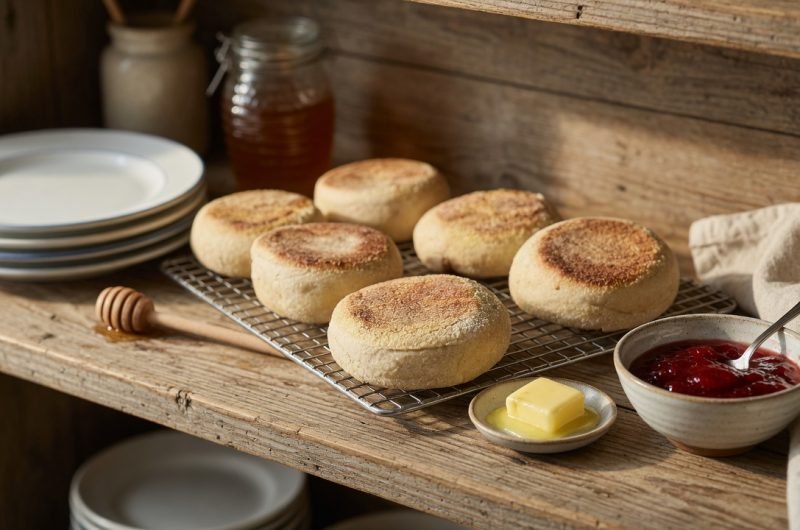

Soft, fluffy, homemade sourdough English muffins with a lightly crisp outside, a tender inside, and a delicious naturally fermented flavor. These easy skillet-cooked muffins are perfect for breakfast, brunch, or sandwiches.
Recipe Overview
- Preparation Time: 25 minutes
- Resting and Fermentation: 8–12 hours
- Cooking Time: 20–30 minutes
- Total Time: Approximately 9–13 hours
- Yield: 10–12 English muffins
- Difficulty: Easy to moderate
- Cooking Method: Stovetop or griddle
Why You Will Love These Sourdough English Muffins
There are plenty of reasons to make English muffins at home, especially when you have a sourdough starter ready to use.
Naturally fermented flavor: Sourdough starter gives these muffins a gentle tangy taste and a delicious aroma.
Soft and fluffy texture: The dough creates a tender interior with the traditional nooks and crannies that English muffins are known for.
No oven required: These muffins cook directly in a skillet or on a griddle, making them convenient when you do not want to heat the oven.
Perfect for meal preparation: Make a batch ahead of time, refrigerate or freeze them, and toast whenever you need a quick breakfast.
Simple ingredients: You only need flour, sourdough starter, milk, butter, honey, salt, and a little cornmeal for dusting.
Ingredients
For the Dough
- 100g active sourdough starter (about ½ cup)
- 240g whole milk, lukewarm (1 cup)
- 30g honey or sugar (about 1½ tablespoons)
- 30g unsalted butter, melted and cooled (2 tablespoons)
- 450g bread flour or all-purpose flour (approximately 3¾ cups)
- 8g salt (about 1¼ teaspoons)
- 1–2 tablespoons extra milk, if needed
For Dusting
- 2–3 tablespoons cornmeal or semolina
- A little butter or neutral oil for greasing the skillet
Important: Use an active, bubbly sourdough starter that has recently peaked after feeding. A weak or inactive starter may make the muffins rise slowly or remain dense.
Equipment Needed
- Large mixing bowl
- Kitchen scale or measuring cups
- Wooden spoon or dough scraper
- Clean kitchen towel or plastic wrap
- Rolling pin
- Round biscuit cutter or drinking glass
- Baking tray
- Large skillet, cast-iron pan, or flat griddle
- Spatula
Step-by-Step Instructions
Step 1: Prepare the Sourdough Mixture
In a large mixing bowl, combine the active sourdough starter and lukewarm milk. Stir until the starter is mostly dissolved into the milk.
Add the honey or sugar and melted butter. Mix everything together until combined.
The milk should be comfortably lukewarm, not hot. Excessive heat can damage the natural yeast and bacteria in your sourdough starter.
Step 2: Add the Flour and Salt
Add the flour to the wet ingredients. Sprinkle the salt over the flour and begin mixing with a wooden spoon or dough scraper.
Continue mixing until a rough, slightly sticky dough forms and no large dry patches of flour remain.
If the mixture feels unusually dry, add a tablespoon of milk at a time. If it seems slightly sticky, avoid adding too much extra flour because a softer dough helps create fluffy muffins.
Step 3: Knead the Dough
Transfer the dough to a lightly floured work surface.
Knead for approximately 8–10 minutes by hand, until the dough becomes smoother, softer, and more elastic.
You can also use a stand mixer fitted with a dough hook. Mix on low to medium speed for about 5–7 minutes.
The finished dough should feel soft and slightly tacky but should not be excessively sticky.
Place the dough back into a lightly greased bowl.
Step 4: Begin the First Rise
Cover the bowl with plastic wrap, a lid, or a clean kitchen towel.
Leave the dough at room temperature until it becomes noticeably puffy and increases in volume. Depending on your starter strength and room temperature, this may take approximately 6–10 hours.
For the best flavor, you can allow the dough to ferment slowly overnight.
Do not rely only on the clock. Watch the dough’s appearance and texture. It should look airy and expanded rather than completely flat or collapsed.
Step 5: Shape the English Muffins
Once the dough has risen, transfer it onto a lightly floured work surface.
Gently press the dough to release some of the larger air bubbles.
Roll it out to approximately 1.5–2 cm (about ⅝–¾ inch) thick.
Use a 3-inch round cutter to cut out individual muffins. Press the cutter straight down rather than twisting it, which can help the dough rise evenly.
Gather the remaining dough scraps, gently bring them together, and roll them out again. Continue cutting until all the dough has been used.
You should get approximately 10–12 muffins, depending on the cutter size and dough thickness.
Step 6: Add Cornmeal and Rest
Sprinkle a baking tray generously with cornmeal or semolina.
Place the shaped muffins on the tray, leaving space between each one.
Sprinkle a little more cornmeal over the tops.
Cover loosely with a clean towel and let them rest for approximately 1–2 hours, or until they become noticeably puffy.
The exact proofing time depends on room temperature and starter activity. Avoid letting them overproof, as very fragile muffins can deflate when transferred to the skillet.
Step 7: Heat the Skillet
Place a heavy skillet or cast-iron pan over low to medium-low heat.
Allow it to warm gradually. Lightly grease the surface with butter or a small amount of neutral oil.
The pan should be warm enough to cook the muffins slowly without burning their bottoms before the centers are done.
Avoid using high heat. English muffins need gentle, even cooking.
Step 8: Cook the Muffins
Carefully transfer a few muffins to the warm skillet, leaving enough space between them.
Cook for approximately 6–8 minutes on the first side, then gently flip them using a spatula.
Cook the second side for another 6–8 minutes.
The outside should become golden brown, while the inside cooks through and remains soft.
If the muffins brown too quickly, reduce the heat. If they remain pale after several minutes, increase the heat slightly.
Work in batches until all the muffins are cooked.
Step 9: Check for Doneness
A properly cooked English muffin should feel lightly firm on the outside and should have a golden-brown surface.
If you are unsure whether the centers are fully cooked, carefully split one muffin open to check. The interior should be soft and set, not wet or doughy.
If the outside is browned but the middle is still undercooked, reduce the heat and continue cooking gently. You can also finish the muffins in a preheated 350°F (175°C) oven for approximately 5–8 minutes if needed.
Step 10: Cool Before Serving
Transfer the cooked English muffins to a wire rack.
Allow them to cool for at least 15–20 minutes before splitting.
For the traditional English muffin texture, use a fork to pierce around the sides and gently pull the two halves apart. This helps preserve the irregular interior texture.
Serve warm with butter, honey, jam, or your favorite breakfast toppings.
Tips for Perfect Sourdough English Muffins
Use an active starter: A bubbly starter that has recently peaked gives the dough better fermentation and rise.
Keep the dough soft: Avoid adding too much flour during mixing or kneading. A slightly tacky dough helps create a tender crumb.
Allow enough fermentation time: Sourdough works more slowly than commercial yeast. Give the dough enough time to become puffy and airy.
Roll evenly: Keep the dough at a consistent thickness so the muffins cook evenly.
Use low heat: A hot skillet can burn the outside while leaving the middle raw. Gentle heat is the secret to properly cooked muffins.
Avoid overcrowding: Cook in batches so each muffin has enough room and the pan temperature stays consistent.
Split with a fork: Fork-splitting creates the familiar rough texture that holds melted butter and jam.
Variations and Flavor Ideas
Whole Wheat Sourdough English Muffins
Replace up to half of the all-purpose or bread flour with whole wheat flour. The muffins will have a slightly nuttier flavor and a heartier texture. You may need a little extra milk because whole wheat flour absorbs more liquid.
Honey Sourdough English Muffins
Use honey instead of sugar for a gentle sweetness. Honey pairs beautifully with butter, cream cheese, and fruit preserves.
Cinnamon Raisin English Muffins
Add 1–2 teaspoons of ground cinnamon and approximately ½ cup of raisins to the dough. Fold the raisins in after the flour has been incorporated.
Cheese English Muffins
Add approximately ½ cup of finely shredded cheddar cheese to the dough for a savory variation. These are delicious with eggs or breakfast sandwiches.
Sourdough Discard English Muffins
You can use sourdough discard in a modified recipe, but inactive discard alone may not provide enough leavening for fluffy muffins. Combine discard with a small amount of commercial yeast or use an active starter for the rise. Adjust the liquid and flour as needed.
How to Store Sourdough English Muffins
At room temperature: Allow the muffins to cool completely. Store them in an airtight container or food-safe bag for up to 2–3 days.
In the refrigerator: Store cooled muffins in an airtight container for approximately 5–7 days. Toast before serving for the best texture.
In the freezer: Slice the cooled muffins in half and place parchment paper between them if stacking. Store in a freezer-safe bag for up to 3 months.
To serve frozen muffins, toast them directly from frozen or allow them to thaw before warming.
How to Reheat English Muffins
The easiest way to reheat English muffins is to split them with a fork and toast both halves until golden.
You can also warm them in a skillet over low heat for a few minutes on each side.
For a softer texture, wrap a muffin in foil and warm it in a 300°F (150°C) oven for approximately 5–8 minutes.
Frequently Asked Questions
Why are my sourdough English muffins dense?
Dense muffins are often caused by an inactive starter, insufficient fermentation, or adding too much flour. Make sure your starter is bubbly and allow the dough to become noticeably puffy before shaping and cooking.
Can I prepare the dough overnight?
Yes. Mix and knead the dough, cover it, and allow it to ferment slowly overnight in a cool room. If your kitchen is warm, refrigerate the dough to prevent overfermentation. Bring chilled dough back toward room temperature before shaping if it is too firm to work with.
Can I use all-purpose flour instead of bread flour?
Yes. All-purpose flour works well for English muffins. Bread flour may produce a slightly chewier texture because it contains more protein.
Why do my muffins burn before cooking inside?
The skillet is probably too hot. Reduce the heat and allow the muffins to cook slowly. A heavy-bottomed pan or cast-iron skillet can help distribute heat more evenly.
Do I need a special English muffin ring?
No. A round cutter is enough to shape the muffins. You can also shape them by hand, although a cutter creates more consistent sizes.
How do I get the traditional nooks and crannies?
Use a soft, well-fermented dough and avoid pressing the muffins too firmly during shaping. Once cooked and cooled slightly, split them with a fork instead of cutting straight through with a knife.
Can I freeze homemade sourdough English muffins?
Absolutely. Cool them completely, split them, and freeze in an airtight bag. They can be toasted straight from frozen for a quick breakfast.
Are sourdough English muffins sweet?
These muffins have a mild flavor with just a little sweetness from honey or sugar. They are not dessert-sweet, so they work equally well with savory or sweet toppings.
Serving Suggestions
Sourdough English muffins are incredibly versatile. Serve them with:
- Butter and strawberry jam
- Honey and cream cheese
- Scrambled eggs and cheddar
- Fried eggs and avocado
- Smoked salmon and cream cheese
- Peanut butter and sliced bananas
- Homemade breakfast sandwiches
- Fresh berries and yogurt
They also make an excellent base for eggs Benedict. Split and toast the muffins, add poached eggs and ham, and finish with hollandaise sauce.
Sourdough English Muffins Recipe Card
Ingredients:
- 100g active sourdough starter
- 240g lukewarm whole milk
- 30g honey or sugar
- 30g melted unsalted butter
- 450g bread flour or all-purpose flour
- 8g salt
- 2–3 tablespoons cornmeal or semolina
- Butter or oil for the skillet
Instructions:
- Mix the sourdough starter, milk, honey, and melted butter in a large bowl.
- Add flour and salt. Mix until a soft dough forms.
- Knead for 8–10 minutes until smooth and elastic.
- Cover and ferment at room temperature until noticeably puffy, approximately 6–10 hours depending on conditions.
- Roll the dough to 1.5–2 cm thick and cut into 3-inch rounds.
- Place on a cornmeal-dusted tray, cover, and proof for 1–2 hours until puffy.
- Heat a lightly greased skillet over low to medium-low heat.
- Cook each muffin for approximately 6–8 minutes per side, adjusting the heat as needed.
- Check that the centers are fully cooked.
- Cool on a wire rack before splitting and serving.
Notes:
- Fermentation times vary with starter strength and room temperature.
- Keep the skillet temperature low enough to cook the centers without burning the outside.
- Cool completely before storing or freezing.
- For the best texture, split the muffins with a fork and toast before serving.
Final Thoughts
These homemade sourdough English muffins are a wonderful way to enjoy the flavor and texture of naturally fermented bread in a simple stovetop recipe. Their golden crust, soft interior, and classic nooks and crannies make them a delicious addition to any breakfast table.
Once you try making them from scratch, you may never want to go back to store-bought muffins. Prepare a batch, freeze a few for later, and enjoy fresh, toasted sourdough English muffins whenever you like.