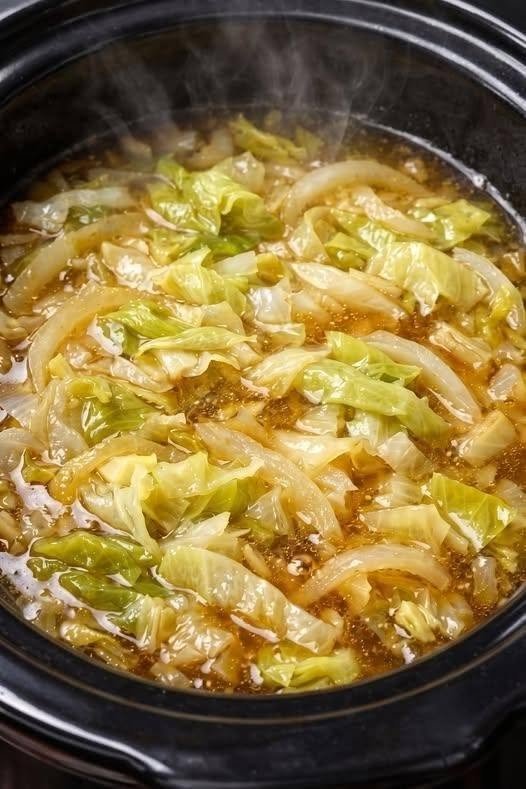

When you want a warm, comforting meal without spending hours in the kitchen, this Slow Cooker Cabbage Soup is an excellent choice. Made with tender cabbage, potatoes, carrots, celery, onion, tomatoes, and flavorful herbs, this simple vegetable soup is hearty, nourishing, and incredibly easy to prepare.
The beauty of this recipe is that most of the work happens before the slow cooker is turned on. Once the vegetables are chopped and the ingredients are added to the crockpot, you can simply cover it and let the gentle heat transform everything into a delicious, flavorful soup.
As the vegetables slowly cook, they become tender while the vegetable stock and tomato puree develop into a rich and savory broth. Fresh dill added near the end gives the soup a bright herbal finish, while smoked paprika and a drizzle of extra virgin olive oil make an optional but delicious finishing touch.
This cabbage soup is perfect for a cozy lunch, light dinner, meal prep, or a simple meatless meal for the family.
Why You’ll Love This Slow Cooker Cabbage Soup
There are plenty of reasons to keep this easy soup recipe in your weekly meal rotation.
Easy Preparation
There is no complicated cooking involved. Simply chop the vegetables, add everything to the slow cooker, and let it cook until tender.
Budget-Friendly
Cabbage, potatoes, carrots, celery, and onions are affordable ingredients that can create a generous pot of satisfying soup.
Perfect for Busy Days
Once everything is in the slow cooker, you can leave it to cook while you take care of other things.
Great for Meal Prep
This recipe makes a generous batch, and the leftovers can be refrigerated for several days or frozen for later.
Naturally Plant-Based
The basic recipe uses vegetables, herbs, tomato puree, and vegetable stock, making it a naturally vegan-friendly and gluten-free option when using suitable vegetable stock.
Full of Comforting Flavor
Although the ingredient list is simple, slow cooking allows the flavors to blend beautifully into a satisfying bowl of homemade soup.
Ingredients
Vegetables
- ½ head new cabbage, chopped
- 4 medium yellow potatoes, cut into cubes
- 2 medium carrots, chopped
- 2 celery sticks, chopped
- ½ large Vidalia onion, chopped
- 4 sprigs fresh parsley
Broth
- 8 cups vegetable stock
- 1 can (15 ounces) tomato puree
Seasonings
- ½ teaspoon marjoram
- Salt, to taste
- Black pepper, to taste
For Serving
- ½ cup fresh dill, chopped
- Spanish smoked paprika, optional
- 3 tablespoons extra virgin olive oil, optional
Ingredient Notes
Cabbage
Cabbage is the star of this soup. As it cooks slowly, it becomes tender and develops a naturally mild sweetness. Chop it into bite-sized pieces so it is easy to eat and cooks evenly.
Yellow Potatoes
Yellow potatoes provide body and substance to the soup. They become tender during slow cooking while helping make the broth feel more satisfying.
Carrots
Carrots contribute natural sweetness, color, and texture. Cutting them into similar-sized pieces helps them cook evenly with the potatoes and cabbage.
Celery
Celery adds a mild savory flavor that works especially well with onion and herbs.
Vidalia Onion
Vidalia onions have a naturally sweet flavor. Slow cooking allows the onion to soften and blend into the broth, creating a flavorful base for the soup.
Tomato Puree
Tomato puree gives the soup its rich color and adds a subtle acidity that balances the sweetness of the vegetables.
Vegetable Stock
Vegetable stock provides the foundation of the broth. For the best flavor, choose a good-quality stock that you enjoy on its own.
Because different stocks contain different amounts of sodium, it’s best to taste the finished soup before adding additional salt.
Marjoram
A small amount of dried marjoram adds a gentle earthy and herbal note that complements cabbage and the other vegetables.
Fresh Dill
Fresh dill is added near the end of cooking rather than being simmered for hours. This helps preserve its bright, fresh flavor.
How to Make Slow Cooker Cabbage Soup
Step 1: Prepare the Vegetables
Start by washing and preparing all of the vegetables.
Chop the cabbage into bite-sized pieces. Cut the potatoes into medium cubes, chop the carrots and celery, and dice the Vidalia onion.
Try to keep the potato and carrot pieces relatively similar in size so they cook evenly.
Step 2: Add Everything to the Slow Cooker
Place the chopped cabbage, potatoes, carrots, celery, and onion into your slow cooker.
Add the fresh parsley sprigs and sprinkle in the marjoram.
Pour the vegetable stock over the vegetables, followed by the tomato puree.
Give everything a gentle stir to distribute the ingredients throughout the broth.
Step 3: Cover and Cook
Place the lid securely on the slow cooker.
Cook according to your preferred setting:
- High: Approximately 5 hours
- Low: Approximately 9 hours
The soup is ready when the cabbage, potatoes, carrots, and other vegetables are tender.
Cooking times can vary depending on the slow cooker and the size of the vegetables, so use tenderness as your main guide.
Step 4: Add the Fresh Dill
Once the vegetables are tender, remove the parsley sprigs if desired.
Stir the freshly chopped dill into the hot soup.
Adding the dill near the end gives the soup a fresh, aromatic flavor without allowing the herb to become dull from prolonged cooking.
Step 5: Season the Soup
Taste the broth and add salt and black pepper as needed.
Since vegetable stock can already contain a significant amount of sodium, always taste before adding a large amount of additional salt.
Step 6: Serve
Ladle the hot cabbage soup into bowls.
For an optional finishing touch, sprinkle a little Spanish smoked paprika over each serving and drizzle with extra virgin olive oil.
Serve warm with crusty bread, toast, or your favorite side.
Should You Add the Tomato Puree at the Beginning?
You have a little flexibility with the tomato puree.
Adding it at the beginning is the easiest method and allows the tomato flavor to blend with the broth throughout the cooking process.
However, because tomatoes are acidic, they can sometimes slow the softening of certain vegetables. If you find that your vegetables take longer to become tender, you can add the tomato puree during the final hour of cooking.
Both approaches can produce a delicious soup.
Tips for the Best Cabbage Soup
Cut the Vegetables Evenly
Uniform pieces cook more consistently. Avoid cutting some vegetables extremely large while others are very small.
Don’t Keep Opening the Lid
Try to keep the slow cooker covered during cooking. Frequently removing the lid allows heat to escape and can increase the cooking time.
Season at the End
It’s easier to control the final flavor when you taste the soup after cooking and then adjust the salt and pepper.
Use Fresh Dill
Fresh dill adds a wonderful finishing flavor. Add it after cooking rather than leaving it in the slow cooker for the entire cooking time.
Don’t Overfill Your Slow Cooker
Leave enough space in the slow cooker for the broth and ingredients to cook properly. If your slow cooker is smaller, you may need to reduce the recipe.
How to Serve Cabbage Soup
This soup is delicious by itself, but a few simple sides can turn it into a more substantial meal.
Serve it with:
- Crusty bread
- Garlic toast
- Sourdough bread
- Dinner rolls
- A simple green salad
- Roasted vegetables
- Toasted bread with olive oil
A drizzle of extra virgin olive oil and a sprinkle of smoked paprika also make an easy and flavorful garnish.
Easy Recipe Variations
The basic vegetable soup is delicious as written, but it can also be customized.
Add Beans
For additional substance, add cooked white beans, kidney beans, or chickpeas near the end of cooking.
Add Lentils
Cooked lentils can make the soup more filling while complementing the vegetables and tomato broth.
Add Sausage
For a non-vegetarian variation, add cooked sliced sausage or another favorite cooked meat.
Add More Herbs
Parsley, dill, thyme, or additional marjoram can be used to adjust the flavor.
Add Greens
Stir chopped spinach or kale into the finished soup and allow it to wilt before serving.
Add a Little Heat
For a spicy version, add red pepper flakes, cayenne pepper, or a small amount of chili powder.
Stovetop Alternative
If you don’t have a slow cooker, you can prepare this soup on the stovetop.
Add the prepared cabbage, potatoes, carrots, celery, onion, parsley, marjoram, and vegetable stock to a large soup pot.
Bring the mixture to a gentle boil, then reduce the heat and cover.
Simmer until the vegetables are tender, usually around 45–60 minutes depending on the size of the vegetables.
Add the tomato puree and continue simmering for about 10–15 minutes. Remove the parsley, stir in the fresh dill, and season with salt and pepper.
Serve immediately with your preferred toppings.
Storage Instructions
Slow Cooker Cabbage Soup is an excellent make-ahead meal.
Allow the soup to cool before transferring it to airtight containers.
Store it in the refrigerator for up to 4 days.
When ready to eat, reheat individual portions in the microwave or warm the soup gently in a saucepan on the stovetop.
Can You Freeze Cabbage Soup?
Yes, this soup can be frozen.
Allow the cooked soup to cool completely, then divide it into freezer-safe containers or bags.
Freeze for up to 2 months for the best quality.
Leave a little space at the top of containers because the soup may expand as it freezes.
Thaw frozen soup in the refrigerator before reheating when possible. Stir well after reheating and adjust the seasoning if needed.
Common Mistakes to Avoid
Adding Too Much Salt
Vegetable stock can already be salty. Always taste the finished soup before adding extra salt.
Cutting Potatoes Too Large
Very large potato pieces may take longer to become tender than the rest of the vegetables.
Overcooking the Vegetables
Slow cookers vary, so check the vegetables toward the end of the suggested cooking time.
Adding Dill Too Early
Fresh dill has a brighter flavor when added near the end rather than cooked for many hours.
Opening the Lid Frequently
Every time the lid is removed, heat escapes. Keep the slow cooker covered as much as possible.
Frequently Asked Questions
Can I use green cabbage?
Yes. Regular green cabbage works very well in this recipe.
Can I use red cabbage?
You can, although red cabbage will change the color and appearance of the broth.
Can I make this soup overnight?
Yes, the low setting is suitable for a longer cooking schedule. Follow your slow cooker’s recommended operating guidelines.
Is cabbage soup vegan?
The ingredients listed are plant-based, so the recipe can be vegan when the vegetable stock and any toppings used are vegan-friendly.
Is this soup gluten-free?
The listed ingredients do not contain gluten, but always check packaged vegetable stock and other processed ingredients if you need the soup to be strictly gluten-free.
Can I add meat?
Yes. Cooked sausage, chicken, or another protein can be added if you don’t need the recipe to remain vegetarian.
Can I make this soup without tomato puree?
Yes, although the flavor and color will be different. You can use additional vegetable stock for a lighter broth.
Recipe Card
Slow Cooker Cabbage Soup
Prep Time: 15 minutes
Cook Time: 5 hours on High or 9 hours on Low
Total Time: About 5–9 hours
Servings: 6–8
Course: Lunch, Dinner
Cuisine: European-inspired
Difficulty: Easy
Ingredients
- ½ head new cabbage, chopped
- 4 medium yellow potatoes, cubed
- 2 medium carrots, chopped
- 2 celery sticks, chopped
- ½ large Vidalia onion, chopped
- 8 cups vegetable stock
- 1 can (15 ounces) tomato puree
- 4 sprigs fresh parsley
- ½ teaspoon marjoram
- Salt and black pepper, to taste
- ½ cup fresh dill, chopped
- Spanish smoked paprika, optional
- 3 tablespoons extra virgin olive oil, optional
Instructions
- Add the chopped cabbage, potatoes, carrots, celery, and onion to a slow cooker.
- Pour in the vegetable stock and tomato puree.
- Add the parsley sprigs and marjoram.
- Stir gently to combine.
- Cover and cook on High for approximately 5 hours or Low for approximately 9 hours, until the vegetables are tender.
- Remove the parsley sprigs if desired.
- Stir in the fresh chopped dill.
- Season with salt and black pepper to taste.
- Ladle the soup into bowls.
- Garnish with smoked paprika and a drizzle of extra virgin olive oil, if desired.
- Serve warm with crusty bread.
Recipe Notes
- Taste before adding salt because vegetable stock may already contain sodium.
- Fresh dill is best added at the end for a brighter flavor.
- If desired, add tomato puree during the final hour to help the vegetables soften more quickly.
- Store leftovers in the refrigerator for up to 4 days.
- Freeze cooled soup for up to 2 months.
Nutrition Information
The original recipe lists approximately 158 calories per serving, with:
- Fat: 5 g
- Sodium: 988 mg
- Potassium: 750 mg
- Carbohydrates: 25 g
- Fiber: 5 g
- Sugar: 6 g
- Protein: 4 g
- Vitamin A: 3525 mcg
- Vitamin C: 40 mg
- Iron: 4.4 mg
Nutrition information is approximate and may vary depending on the vegetable stock, portion size, and specific ingredients used.
Final Thoughts
This Slow Cooker Cabbage Soup is proof that simple ingredients can create an incredibly comforting meal. With cabbage, potatoes, carrots, celery, onion, tomatoes, herbs, and vegetable stock, you can make a generous pot of homemade soup with very little hands-on effort.
The slow cooker takes care of the cooking while the vegetables become tender and the broth develops a rich, savory flavor. Fresh dill adds a bright finishing note, while smoked paprika and olive oil provide an optional extra layer of flavor.
Whether you’re looking for an easy weeknight dinner, a budget-friendly meal, or a make-ahead recipe for busy days, this cozy cabbage soup is a delicious addition to your recipe collection.


