Olivia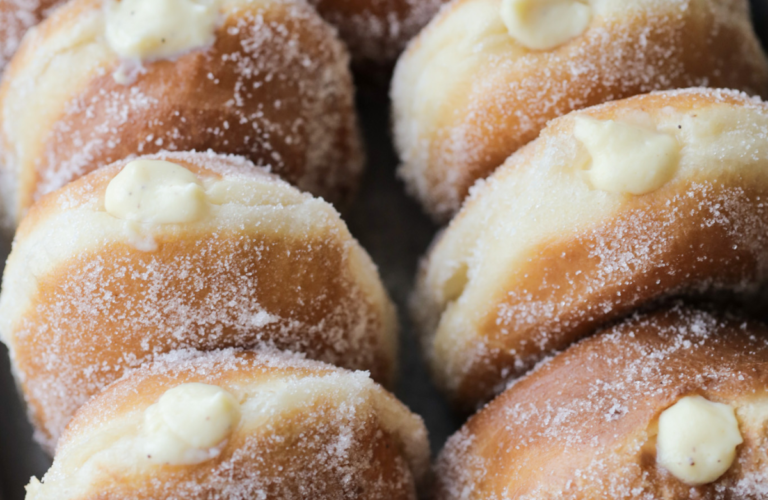
Soft homemade donuts filled with silky vanilla custard are one of the most comforting bakery treats you can make from scratch. These Sourdough Discard Vanilla Custard Filled Donuts combine fluffy enriched dough with creamy homemade custard and a delicate sugar coating for the perfect balance of sweetness and texture.
Using sourdough discard in the dough creates incredible flavor and tenderness while reducing waste from your sourdough starter. The slight tang from the discard balances the rich custard filling beautifully, making these donuts taste more complex and flavorful than ordinary yeast donuts.
These donuts are soft, airy, buttery, and filled with smooth vanilla pastry cream that melts in your mouth. While the recipe takes some time because of proofing and filling, every step is simple and rewarding. Once you bite into a warm homemade custard donut, it’s hard to go back to store-bought versions.
Whether you make them for holidays, birthdays, brunch, or weekend baking, these donuts are guaranteed to impress family and friends.
Why You’ll Love This Recipe
These sourdough discard vanilla custard donuts are:
- Soft and fluffy
- Filled with rich homemade custard
- Perfectly sweet
- Light and airy
- Full of vanilla flavor
- Great for using sourdough discard
- Better than bakery donuts
- Perfect for special occasions
The combination of tender dough and creamy filling creates a truly bakery-style experience at home.
What Is Sourdough Discard?
Sourdough discard is the portion of sourdough starter removed during feeding.
Even though it may not always be active enough for bread baking, discard still adds:
- Flavor
- Tenderness
- Moisture
- Natural fermentation benefits
In donut dough, sourdough discard improves texture while giving subtle tangy depth.
Commercial yeast still helps the dough rise properly, making the recipe reliable and beginner-friendly.
Ingredients
For the Donut Dough
- 1/2 cup sourdough discard
- 3 1/2 cups all-purpose flour
- 2 1/4 teaspoons instant yeast
- 3/4 cup warm milk
- 1/4 cup granulated sugar
- 2 eggs
- 1/4 cup softened butter
- 1 teaspoon vanilla extract
- 1/2 teaspoon salt
For the Vanilla Custard Filling
- 2 cups whole milk
- 4 egg yolks
- 1/2 cup granulated sugar
- 3 tablespoons cornstarch
- 1 tablespoon butter
- 2 teaspoons vanilla extract
For Frying and Coating
- Vegetable oil for frying
- 1 cup granulated sugar
Equipment Needed
- Mixing bowls
- Stand mixer (optional)
- Rolling pin
- Round cutter
- Heavy pot or Dutch oven
- Cooking thermometer
- Piping bag
- Filling tip
Step 1: Activate the Yeast
In a large bowl, combine:
- Warm milk
- Sugar
- Instant yeast
Allow the mixture to sit for 5 minutes until slightly foamy.
This step helps ensure the yeast is active and ready to rise properly.
Step 2: Make the Dough
Add to the yeast mixture:
- Sourdough discard
- Eggs
- Vanilla extract
Whisk until smooth.
Gradually add the flour and salt.
Mix until a rough dough forms.
Add softened butter and knead thoroughly until smooth and elastic.
Kneading takes:
- About 10 minutes by hand
or - 7 minutes using a stand mixer
The dough should feel:
- Soft
- Smooth
- Slightly tacky
- Stretchy
Avoid adding too much flour because soft dough creates lighter donuts.
Step 3: First Rise
Transfer the dough to a lightly greased bowl.
Cover with plastic wrap or a kitchen towel.
Allow the dough to rise for 1 1/2 to 2 hours or until doubled in size.
For deeper flavor, refrigerate overnight after the first rise.
Cold fermentation improves texture and makes shaping easier.
Step 4: Prepare the Vanilla Custard
While the dough rises, prepare the custard filling.
In a saucepan, heat the milk over medium heat until steaming but not boiling.
In a separate bowl, whisk together:
- Egg yolks
- Sugar
- Cornstarch
Slowly pour part of the warm milk into the egg mixture while whisking continuously.
This process tempers the eggs and prevents scrambling.
Pour the mixture back into the saucepan.
Cook over medium heat while whisking constantly until thick and smooth.
Once thickened, remove from heat and stir in:
- Butter
- Vanilla extract
The custard should become:
- Smooth
- Creamy
- Glossy
- Thick enough to hold shape
Transfer the custard to a bowl and press plastic wrap directly onto the surface.
Refrigerate until completely cold.
Step 5: Shape the Donuts
Turn the risen dough onto a lightly floured surface.
Roll it to about:
- 1/2 inch thickness
Use a round cutter to cut circles.
Place the donuts onto parchment-lined trays with space between each one.
Gather scraps gently and repeat until all dough is used.
You should get approximately 10 to 12 donuts.
Step 6: Second Rise
Cover the shaped donuts lightly with a towel.
Allow them to rise for 30 to 45 minutes until noticeably puffy.
Proper proofing is essential for light and airy donuts.
The dough should feel soft and spring back slowly when lightly touched.
Step 7: Heat the Oil
Fill a heavy pot with about 2 to 3 inches of vegetable oil.
Heat the oil to:
- 350°F (175°C)
Use a thermometer for accuracy.
Maintaining the correct oil temperature is extremely important.
If the oil is:
- Too hot → donuts burn outside
- Too cool → donuts absorb excess oil
Step 8: Fry the Donuts
Carefully place a few donuts into the hot oil.
Do not overcrowd the pot.
Fry for:
- 1 to 2 minutes per side
The donuts should become:
- Puffy
- Golden brown
- Light and airy
Remove using a slotted spoon.
Place on paper towels or a cooling rack.
While still slightly warm, roll the donuts in granulated sugar.
The sugar coating creates classic bakery-style texture and sweetness.
Step 9: Fill the Donuts
Transfer chilled vanilla custard into a piping bag fitted with a filling tip.
Use a small knife or skewer to create a hole in the side of each donut.
Pipe custard carefully into the center until the donut feels full and slightly heavy.
Avoid overfilling to prevent splitting.
The creamy filling should stay neatly inside.
Texture and Flavor
These donuts are:
- Ultra soft
- Light and fluffy
- Rich and buttery
- Creamy in the center
- Delicately sweet
- Full of vanilla flavor
The sourdough discard adds subtle complexity without overpowering the sweetness.
The custard creates smooth luxurious texture inside every bite.
Tips for Perfect Custard Donuts
Use Soft Dough
Sticky dough creates lighter donuts.
Adding too much flour can make donuts dense.
Chill the Custard Fully
Cold custard pipes more easily and stays thick inside the donuts.
Monitor Oil Temperature
Consistent heat prevents greasy donuts.
Don’t Overproof
Overproofed donuts may collapse during frying.
Fill Carefully
Too much filling can burst through the sides.
Why Homemade Donuts Taste Better
Fresh homemade donuts offer:
- Softer texture
- Fresher flavor
- Better ingredients
- Richer custard
- Real vanilla taste
Warm donuts fresh from the fryer simply cannot be matched by packaged bakery versions.
Overnight Donut Method
For easier preparation:
Day 1
- Make dough
- Refrigerate overnight
Day 2
- Shape
- Rise
- Fry
- Fill
This method improves flavor and saves time the next day.
Flavor Variations
Chocolate Custard Donuts
Add melted dark chocolate to the custard.
Lemon Vanilla Donuts
Add lemon zest to the custard filling.
Cinnamon Sugar Donuts
Mix cinnamon into the sugar coating.
Strawberry Custard Donuts
Fold strawberry puree into the custard.
Espresso Custard
Add espresso powder for coffee-flavored filling.
Storage Instructions
Custard-filled donuts are best enjoyed fresh.
However, they can be stored in the refrigerator for up to 2 days.
Store in an airtight container.
Because of the custard filling, refrigeration is necessary.
Reheating
Warm slightly in the microwave for:
- 8 to 10 seconds
Do not overheat or the custard may become runny.
Common Mistakes to Avoid
Dense Donuts
Caused by:
- Too much flour
- Underproofing
- Insufficient kneading
Greasy Texture
Usually caused by:
- Oil temperature too low
Burned Exterior
Oil too hot can brown donuts before centers cook fully.
Runny Custard
Custard must cook long enough to fully thicken.
Serving Ideas
Serve these donuts with:
- Coffee
- Cappuccino
- Hot chocolate
- Tea
- Cold milk
They are perfect for:
- Brunch
- Dessert tables
- Family gatherings
- Birthdays
- Holiday mornings
Frequently Asked Questions
Can I Bake These Instead of Frying?
Yes, but the texture will be more bread-like.
Bake at:
- 375°F (190°C)
until golden.
Fried donuts remain softer and more traditional.
Can I Freeze Them?
Unfilled donuts freeze well.
Filled donuts are best eaten fresh.
Can I Use Active Starter Instead of Discard?
Absolutely.
Active starter works beautifully in this recipe.
Can I Make Mini Donuts?
Yes.
Simply reduce frying time slightly.
Mini custard donuts are excellent for parties.
Why This Recipe Works
This recipe balances enriched dough ingredients perfectly.
- Butter creates richness
- Eggs add softness
- Sourdough discard improves texture
- Yeast provides reliable rise
- Custard adds creamy contrast
The result is bakery-quality donuts with homemade flavor and freshness.
Final Thoughts
Sourdough Discard Vanilla Custard Filled Donuts are a beautiful combination of fluffy homemade dough and creamy vanilla filling. The subtle tang from sourdough discard makes the flavor deeper and more interesting, while the silky custard creates rich bakery-style texture in every bite.
Although making filled donuts takes a little extra time, the process is rewarding and surprisingly manageable. The end result is far superior to store-bought donuts, with fresher flavor, softer texture, and luxurious homemade custard.
Whether served warm for breakfast, shared at brunch, or enjoyed as a weekend baking project, these homemade custard-filled donuts are guaranteed to become a favorite recipe you’ll want to make again and again.