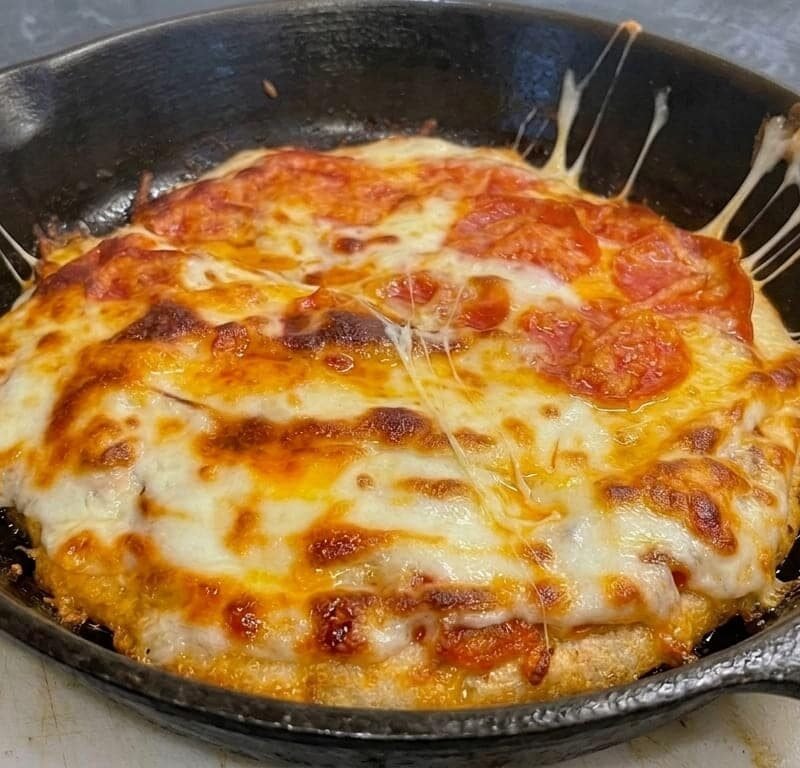

If you maintain a sourdough starter, you probably know how quickly sourdough discard can collect in the refrigerator. Instead of throwing it away, turn it into a delicious homemade pizza with this easy Sourdough Discard Skillet Pizza recipe.
This simple recipe creates a golden, crispy-edged pizza with a tender, slightly chewy center. Unlike traditional pizza dough, it does not require kneading, rolling, stretching, shaping, or a long fermentation process. The sourdough discard is poured directly into a hot, oiled cast-iron skillet, where it begins cooking immediately.
The result is a unique crust that falls somewhere between classic pizza, focaccia, and a crispy skillet flatbread. Once the crust has baked and set, you add pizza sauce, mozzarella cheese, and your favorite toppings before returning it to the oven for the final bake.
This recipe is perfect for a quick lunch, easy dinner, or a satisfying snack whenever you have sourdough discard ready to use.
Why You’ll Love This Sourdough Discard Skillet Pizza
There are plenty of reasons to keep this recipe in your sourdough collection.
- Easy to prepare: No kneading, rolling, stretching, or shaping is required.
- A great way to use discard: Refrigerated sourdough discard works well in this recipe.
- Crispy edges: A thoroughly heated cast-iron skillet helps create a beautifully browned crust.
- Tender center: The middle stays soft and slightly chewy.
- Customizable toppings: Use pepperoni, vegetables, cheese, herbs, or your favorite pizza toppings.
- Quick baking process: The crust and toppings bake in two stages, helping the base cook properly.
- Beginner-friendly: The pour-and-bake method is simple enough for anyone learning to use sourdough discard.
What Makes This Pizza Different From Traditional Pizza?
Traditional pizza dough is usually made with flour, water, yeast or sourdough starter, and salt. It is mixed, kneaded or developed through fermentation, and shaped before baking.
This sourdough discard skillet pizza uses a different approach. The discard is poured into a hot skillet rather than shaped into a dough ball. Because sourdough discard has a batter-like consistency, it spreads across the pan and begins setting as soon as it touches the hot surface.
The cast iron helps brown the bottom and crisp the edges, while the center remains tender. This gives the pizza a texture that is different from a hand-stretched or Neapolitan-style crust.
The recipe is not designed to duplicate traditional pizza dough. Its appeal is its simplicity, distinctive texture, and usefulness as a quick sourdough discard recipe.
Ingredients for Sourdough Discard Skillet Pizza
This recipe uses a short list of ingredients and is designed for a 10-inch cast-iron skillet.
For the Crust
- 1 cup sourdough discard, approximately 225–240 grams
- 1 tablespoon avocado oil, divided
- ¼ teaspoon salt
- ½ teaspoon Italian seasoning
- ¼ teaspoon garlic powder, optional
For the Topping
- ⅓ cup pizza sauce
- 1 to 1½ cups shredded mozzarella cheese
- Pepperoni or another preferred topping
- Grated Parmesan cheese, optional
- Red pepper flakes, optional
- Fresh or dried herbs, optional
Ingredient Notes
Sourdough discard: Use discard with a thick consistency similar to pancake batter. Refrigerated discard is suitable, but allowing it to sit at room temperature for 30–60 minutes can help it spread and maintain the skillet’s heat.
Avocado oil: Avocado oil is used because it works well at high cooking temperatures. Another neutral, high-heat cooking oil can be substituted.
Mozzarella cheese: Shredded mozzarella melts smoothly and gives the pizza its classic cheesy topping.
Pizza sauce: Use a light layer of sauce. Too much moisture can soften the center of the crust.
Toppings: Keep the toppings relatively light. Cook raw meat and vegetables that release a lot of water before adding them to the pizza.
Choosing the Best Sourdough Discard
You do not need freshly fed sourdough starter for this recipe. Regular sourdough discard from the refrigerator is a convenient choice.
The consistency of the discard is important. A thick discard that resembles pancake batter spreads easily while still allowing the crust to set properly.
If your discard is unusually runny, the crust may take longer to cook and could remain softer in the center. If it is very cold, it may cool the skillet more quickly when poured into the pan.
For best results, measure the discard and allow it to sit at room temperature for approximately 30–60 minutes before baking. It does not need to become warm; removing the deep refrigerator chill is enough.
Does the Age of the Discard Affect Flavor?
Yes. Older refrigerated discard may develop a stronger sour flavor, while younger discard often tastes milder.
A more pronounced sourdough flavor can pair nicely with bold toppings such as pepperoni, olives, Parmesan, or roasted vegetables. If you prefer a gentler flavor, use discard that has been refrigerated for a shorter time.
Always check the discard before using it. Do not use sourdough discard that shows mold, pink streaks, orange discoloration, or a truly unpleasant rotten smell.
The Best Skillet for This Recipe
A 10-inch cast-iron skillet is the preferred pan for this recipe because cast iron retains heat extremely well.
That stored heat is essential for creating a crisp, browned bottom. When the sourdough discard meets the hot skillet, the base begins setting immediately, helping the crust develop its characteristic texture.
You will also need:
- Measuring cup and measuring spoons
- Spoon or small spatula
- Thick oven mitts
- Heat-safe surface or trivet
- Pizza cutter or sharp knife
Important: The skillet and its handle become extremely hot. Always use thick oven mitts when moving the pan, and keep the handle protected even after the skillet has been removed from the oven.
How to Make Sourdough Discard Skillet Pizza
Follow these steps for a crispy, golden crust with melted cheese and delicious toppings.
Step 1: Bring the Sourdough Discard to Room Temperature
Measure 1 cup of sourdough discard into a bowl or glass measuring cup.
Allow it to sit at room temperature for approximately 30–60 minutes while you prepare the other ingredients.
This is not a fermentation step. The goal is simply to remove the deep chill from refrigerated discard. Room-temperature discard spreads more easily and helps maintain the heat of the skillet.
Step 2: Preheat the Oven and Skillet
Place an empty 10-inch cast-iron skillet inside the oven.
Preheat the oven to 450°F (232°C) with the skillet inside. Once the oven reaches temperature, allow the skillet to continue heating for at least 20 minutes.
This step is especially important because cast iron needs time to become thoroughly hot.
If your oven runs particularly hot, you can use 425°F (218°C), although the crust may need a few additional minutes to bake.
Step 3: Prepare the Toppings
While the skillet heats, prepare your toppings.
Shred the mozzarella, measure the pizza sauce, and prepare your preferred ingredients.
If using raw sausage or another raw meat, cook it before adding it to the pizza. Vegetables that release a lot of moisture, such as mushrooms, zucchini, and spinach, should also be cooked first.
Keeping the toppings relatively light helps prevent the center from becoming too soft.
Step 4: Add Oil and Seasonings to the Hot Skillet
Carefully remove the hot skillet from the oven using thick oven mitts.
Place it on a heat-safe surface. Add approximately 2 teaspoons of avocado oil and carefully tilt the pan to coat the bottom.
Sprinkle the salt, Italian seasoning, and optional garlic powder over the oil.
Work carefully because the skillet is extremely hot and begins losing heat as soon as it leaves the oven.
Step 5: Pour in the Sourdough Discard
Pour the room-temperature sourdough discard directly into the center of the hot skillet.
It should begin to sizzle gently when it touches the pan.
Use the back of a spoon to guide the discard toward the edges if necessary. Avoid spending too much time spreading it because the hot skillet begins cooking the batter immediately.
For a thinner, crispier crust, spread the discard farther toward the sides. For a thicker, softer crust, keep it slightly more concentrated toward the center.
Drizzle the remaining teaspoon of avocado oil around the outer edge of the discard.
Step 6: Bake the Plain Crust
Return the skillet to the oven and bake the plain crust for 10–12 minutes.
Do not add the sauce or toppings yet. The first bake allows the discard to set and develop enough structure to hold the toppings.
The surface should no longer look wet, and the edges should appear firm. The center may puff up or form large bubbles while baking. This is normal.
Pre-baking is one of the most important steps in this recipe because it helps reduce the chance of a soft or gummy center.
Step 7: Add the Pizza Sauce and Toppings
Carefully remove the skillet from the oven.
If a large bubble has formed in the center, gently press it down with the back of a spoon. Avoid flattening the entire crust.
Spread the pizza sauce in a light, even layer, leaving a small border around the outside.
Add the shredded mozzarella and your preferred toppings.
Try not to overload the pizza. Too much sauce, cheese, or moisture-heavy toppings can soften the center and make the crust harder to slice.
Step 8: Finish Baking the Pizza
Return the skillet to the oven.
Bake for another 8–10 minutes, or until the mozzarella has melted completely and begins to brown.
The cheese should be bubbling, the toppings should be heated through, and the edges should look golden and firm.
For a deeper golden finish, you can use the broiler for approximately 30 seconds to 2 minutes at the end. Watch the pizza continuously because the cheese and exposed crust can burn quickly.
Broiling is optional. If the cheese is already melted and browned to your liking, simply remove the pizza from the oven.
Step 9: Rest and Slice
Allow the pizza to rest for approximately 5 minutes.
This short resting period helps the cheese settle and gives the crust a little time to firm up.
Carefully loosen the edges with a thin spatula. Transfer the pizza to a cutting board and slice it with a pizza cutter or sharp knife.
Remember that the skillet handle remains extremely hot even after the pizza has been removed.
Serve the pizza while warm for the best contrast between the crisp edges, tender center, and melted cheese.
How to Adjust the Recipe for Different Skillet Sizes
The amount of sourdough discard can be adjusted according to your skillet size and preferred crust thickness.
| Skillet Size | Suggested Sourdough Discard |
|---|---|
| 8-inch skillet | About ¾ cup |
| 10-inch skillet | About 1 cup |
| 12-inch skillet | About 1¼–1½ cups |
These quantities are approximate because sourdough discard can vary in consistency.
A thinner layer generally cooks more quickly and produces a crispier crust. A thicker layer creates a softer, breadier texture and may require additional baking time before the toppings are added.
The goal is to cover the bottom of the skillet without creating an excessively deep layer.
Best Toppings for Sourdough Discard Pizza
This skillet pizza works with many familiar toppings, but lighter combinations generally produce the best texture.
Classic Pepperoni
Add pizza sauce, mozzarella, pepperoni, and a little Parmesan. This simple combination complements the sourdough flavor without overwhelming the crust.
Vegetable Pizza
Use cooked mushrooms, zucchini, spinach, or other vegetables. Cooking moisture-heavy vegetables before adding them helps prevent the crust from becoming soft.
Extra Cheese Pizza
Add mozzarella with a light sprinkle of Parmesan. Keep the cheese evenly distributed and avoid letting large amounts touch the sides of the skillet, where it may become overly dark.
Herbed Pizza
Fresh or dried herbs can add extra flavor. Red pepper flakes are a good option if you enjoy a little heat.
The key is to use toppings that enhance the crust rather than overwhelm it.
Tips for a Crispier, Better-Baked Crust
Preheat the Skillet Thoroughly
Allow the skillet to heat for at least 20 minutes after the oven reaches temperature. This helps create the immediate heat needed for a browned bottom.
Use Room-Temperature Discard
Very cold discard can reduce the temperature of the skillet. Allowing it to sit at room temperature for 30–60 minutes can help.
Control the Thickness
Spread the discard farther across the pan for a thinner crust. Keep it slightly more concentrated for a thicker, softer base.
Use Pizza Sauce Sparingly
Excess sauce can add too much moisture and soften the center.
Cook Wet Toppings First
Raw meats and vegetables that release a lot of water should be cooked before being added to the pizza.
Watch the Broiler Carefully
If using the broiler for extra browning, stay nearby and monitor the pizza continuously.
Let the Pizza Rest
A five-minute rest helps the cheese settle and makes the pizza easier to remove and slice.
Frequently Asked Questions
Can I use refrigerated sourdough discard?
Yes. Refrigerated discard works well. Allow it to sit at room temperature for approximately 30–60 minutes before baking to help it spread more easily and preserve the skillet’s heat.
Does the sourdough discard need to be active?
No. This recipe uses sourdough discard rather than requiring freshly fed starter.
Can I make this recipe without cast iron?
Cast iron is the recommended option because it retains heat very well. Another pan may work, but it may not produce the same crisp, browned bottom.
Can I use different toppings?
Yes. You can use pepperoni, cooked sausage, vegetables, extra cheese, herbs, or other preferred toppings. Keep the topping layer relatively light to help the crust remain crisp.
Why is my skillet pizza soft in the middle?
A soft center may result from a discard that is too thin, a crust that is too thick, insufficient preheating, or too much sauce and moisture-heavy toppings.
Make sure the skillet is thoroughly heated and bake the plain crust until the surface no longer looks wet before adding toppings.
Can I use a different skillet size?
Yes. Adjust the amount of discard according to the pan size. A thinner layer generally creates a crispier crust, while a thicker layer creates a softer texture and may need more baking time.
How do I know when the pizza is ready?
The crust should be set, the cheese should be fully melted, and the edges should look golden and firm. Allow the pizza to rest for approximately five minutes before slicing.
Why This Is a Great Way to Use Sourdough Discard
If you maintain a sourdough starter, finding useful ways to use discard can make your baking routine more enjoyable.
This skillet pizza transforms leftover starter into a satisfying homemade meal without requiring another long baking project. Since the discard is poured directly into the skillet, the process is straightforward and requires very little hands-on preparation.
The hot cast iron does much of the work, helping develop crisp edges and a browned bottom. A light layer of pizza sauce, mozzarella, and toppings finishes the dish.
It is a practical addition to your collection of easy sourdough discard recipes and a great option when you want homemade pizza without preparing traditional pizza dough.
Final Thoughts
Sourdough Discard Skillet Pizza is an easy and delicious way to use leftover sourdough starter. Its simple pour-and-bake method creates a golden, crispy-edged crust with a tender center, making it a fun alternative to traditional pizza.
The secret is a thoroughly preheated cast-iron skillet, room-temperature discard, and baking the plain crust before adding the toppings. With pizza sauce, mozzarella, and your favorite ingredients, you can create a satisfying homemade pizza without kneading, shaping, or waiting for dough to rise.
Serve it warm for lunch, dinner, or a quick snack. If you enjoy maintaining a sourdough starter, this recipe is a useful and flavorful way to make the most of your discard.
Recipe Card
Recipe Name: Sourdough Discard Skillet Pizza
Prep Time: Approximately 30–60 minutes for bringing discard to room temperature, plus topping preparation
Skillet Preheating: At least 20 minutes after the oven reaches temperature
Bake Time: 18–22 minutes
Resting Time: 5 minutes
Yield: 1 pizza using a 10-inch cast-iron skillet
Ingredients
For the Crust
- 1 cup sourdough discard, approximately 225–240 g
- 1 tablespoon avocado oil, divided
- ¼ teaspoon salt
- ½ teaspoon Italian seasoning
- ¼ teaspoon garlic powder, optional
For the Topping
- ⅓ cup pizza sauce
- 1 to 1½ cups shredded mozzarella cheese
- Pepperoni or another preferred topping
- Grated Parmesan cheese, optional
- Red pepper flakes, optional
- Fresh or dried herbs, optional
Instructions
- Measure the sourdough discard and allow it to sit at room temperature for 30–60 minutes.
- Place an empty 10-inch cast-iron skillet in the oven and preheat to 450°F (232°C). Continue heating the skillet for at least 20 minutes after the oven reaches temperature.
- Prepare the mozzarella and toppings. Cook raw meat and moisture-heavy vegetables before using.
- Carefully remove the hot skillet using thick oven mitts and place it on a heat-safe surface.
- Add approximately 2 teaspoons of avocado oil and tilt the skillet to coat the bottom.
- Sprinkle the salt, Italian seasoning, and optional garlic powder over the oil.
- Pour the sourdough discard into the center of the skillet. Spread it toward the edges as desired.
- Drizzle the remaining teaspoon of oil around the outer edge.
- Bake the plain crust for 10–12 minutes, until the surface no longer looks wet and the edges are set.
- Carefully remove the skillet. Spread the pizza sauce over the crust, leaving a small border.
- Add the mozzarella and preferred toppings.
- Return the skillet to the oven and bake for another 8–10 minutes, until the cheese is melted and beginning to brown.
- If desired, broil for 30 seconds to 2 minutes for extra browning, watching continuously.
- Let the pizza rest for 5 minutes.
- Carefully loosen the edges, transfer the pizza to a cutting board, slice, and serve warm.
Recipe Notes
- A thick sourdough discard with a pancake-batter consistency is ideal.
- Refrigerated discard can be used, but allowing it to sit at room temperature for 30–60 minutes can help.
- Older discard generally has a stronger sourdough flavor than younger discard.
- Do not use discard showing mold, pink streaks, orange discoloration, or a rotten smell.
- A thoroughly preheated cast-iron skillet is essential for a crisp, browned crust.
- Avoid excessive pizza sauce and heavy toppings.
- Cook raw meat and moisture-heavy vegetables before adding them.
- Adjust the amount of discard for different skillet sizes.
- Protect the skillet handle with an oven mitt because it becomes extremely hot.
- If using the broiler, watch the pizza continuously.


