Olivia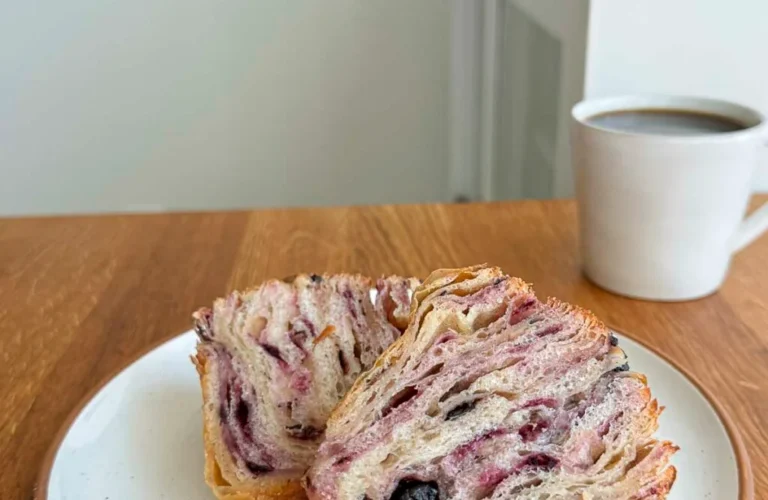
Homemade Sourdough Blueberry Croissants are buttery, flaky, rich, and filled with sweet juicy blueberries wrapped inside delicate sourdough pastry layers. These bakery-style croissants combine the deep flavor of naturally fermented sourdough with classic laminated dough to create pastries that are crisp on the outside, soft inside, and beautifully layered.
The addition of blueberries gives these croissants a fresh fruity sweetness that pairs perfectly with buttery pastry and subtle sourdough tang. Whether enjoyed warm for breakfast, served with coffee, or presented at brunch gatherings, these croissants feel elegant, comforting, and incredibly homemade.
Making croissants from scratch takes time and patience, but the process becomes rewarding once you see the beautiful flaky layers emerge from the oven. The sourdough starter enhances flavor complexity and creates a croissant that tastes richer and more artisan than standard bakery versions.
Once you taste the buttery crisp exterior and soft blueberry-filled center, homemade sourdough croissants become truly unforgettable.
Why You’ll Love This Recipe
- Rich buttery flaky layers
- Fresh blueberry filling
- Tangy sourdough flavor
- Bakery-style texture
- Perfect for breakfast or brunch
- Beautiful homemade pastry
- Deep naturally fermented flavor
What Makes Sourdough Croissants Special?
Traditional croissants already have incredible buttery flavor, but sourdough fermentation adds:
- Richer taste
- Better aroma
- Gentle tanginess
- Improved texture
- More complex flavor
The slow fermentation creates pastry that tastes more artisan and less one-dimensional than quick doughs.
Ingredients
For the Dough
- 500g bread flour
- 100g active sourdough starter
- 250ml milk
- 50g sugar
- 10g salt
- 50g softened butter
- 1 egg
For Laminating
- 250g cold unsalted butter
For the Blueberry Filling
- 1½ cups fresh or frozen blueberries
- 3 tablespoons sugar
- 1 tablespoon cornstarch
- 1 teaspoon lemon juice
For Egg Wash
- 1 egg
- 1 tablespoon milk
Equipment Needed
- Rolling pin
- Mixing bowls
- Baking sheet
- Parchment paper
- Pastry brush
- Plastic wrap
- Sharp knife or pastry cutter
Step 1: Feed the Sourdough Starter
A strong active sourdough starter is essential.
Feed your starter about 4–6 hours before mixing the dough until bubbly and doubled in size.
A healthy starter creates proper fermentation and flavor.
Step 2: Prepare the Dough
In a large bowl, combine:
- Milk
- Active sourdough starter
- Sugar
- Egg
Mix until smooth.
Add:
- Bread flour
- Salt
- Softened butter
Mix until a rough dough forms.
Knead for about 8–10 minutes until smooth and elastic.
The dough should feel soft but not sticky.
Step 3: First Rise
Place the dough into a lightly greased bowl.
Cover and allow it to rise for about 4–6 hours at room temperature until slightly puffy.
The dough does not need to fully double.
After rising, refrigerate the dough for at least 4 hours or overnight.
Cold dough is much easier to laminate.
Step 4: Prepare the Butter Block
Place cold butter between two sheets of parchment paper.
Use a rolling pin to shape it into a rectangle about 7×10 inches.
Refrigerate until firm but still pliable.
The butter should be cold but flexible.
Proper butter consistency is one of the secrets to flaky croissants.
Step 5: Enclose the Butter
Roll the chilled dough into a rectangle slightly larger than the butter block.
Place the butter in the center.
Fold the dough over the butter completely, sealing the edges carefully.
The butter should be fully enclosed inside the dough.
Step 6: First Fold
Roll the dough gently into a long rectangle.
Fold the dough into thirds like a letter.
Wrap and refrigerate for 30–45 minutes.
This chilling step keeps the butter cold and prevents melting.
Step 7: Repeat the Folding Process
Repeat the rolling and folding process two more times.
After each fold:
- Chill the dough
- Keep the butter cold
- Handle gently
These folds create the beautiful flaky layers that make croissants famous.
Why Lamination Creates Flaky Layers
Croissant dough contains thin layers of butter trapped between layers of dough.
During baking:
- Butter releases steam
- Steam separates layers
- Pastry becomes flaky and airy
This process creates hundreds of delicate buttery layers.
Step 8: Prepare the Blueberry Filling
In a small saucepan, combine:
- Blueberries
- Sugar
- Cornstarch
- Lemon juice
Cook over medium heat until thickened slightly.
Allow the filling to cool completely before using.
Cooling prevents melted butter during shaping.
Step 9: Roll and Cut the Dough
Roll the laminated dough into a large rectangle about ¼ inch thick.
Use a sharp knife or pastry cutter to cut long triangles.
Each triangle should have a wide base and pointed tip.
This classic shape creates traditional croissant structure.
Step 10: Add the Filling
Place a small spoonful of blueberry filling near the base of each triangle.
Do not overfill because excess filling may leak during baking.
The blueberries add bursts of sweet fruity flavor inside the buttery pastry.
Step 11: Shape the Croissants
Starting from the wide end, roll the dough gently toward the pointed tip.
Curve the ends slightly inward to create crescent shape.
Place the croissants onto parchment-lined baking sheets.
Leave enough space between them for expansion.
Step 12: Final Proof
Cover the croissants loosely.
Allow them to proof at room temperature for about 3–5 hours until noticeably puffy.
Croissants should jiggle slightly when the tray is shaken gently.
Proper proofing creates light airy texture.
Step 13: Apply Egg Wash
Preheat the oven to 400°F (200°C).
Whisk together the egg and milk.
Brush the croissants gently with egg wash.
This creates glossy golden pastry during baking.
Step 14: Bake the Croissants
Bake for about 18–25 minutes until deeply golden brown.
The layers should puff beautifully and become crisp.
Your kitchen will smell incredible from the butter and blueberries.
The croissants should feel light and flaky.
Step 15: Cool Slightly Before Serving
Allow the croissants to cool for at least 15 minutes before serving.
The filling will be extremely hot immediately after baking.
Cooling also helps the layers finish setting properly.
Tips for Perfect Sourdough Croissants
Keep Butter Cold
Cold butter is essential for flaky layers.
Chill Between Folds
Warm dough can cause butter leakage.
Don’t Overfill
Too much blueberry filling may burst out.
Use Active Starter
Healthy starter improves flavor and fermentation.
Be Gentle While Rolling
Aggressive rolling can destroy layers.
Why Homemade Croissants Taste Better
Homemade croissants offer:
- Fresher butter flavor
- Crispier texture
- Richer aroma
- Better ingredients
- No preservatives
The fresh flaky layers are difficult to match with packaged pastries.
Flavor Variations
Lemon Blueberry Croissants
Add lemon zest to the filling.
Cream Cheese Blueberry Croissants
Add sweet cream cheese filling.
Strawberry Croissants
Replace blueberries with strawberries.
Chocolate Blueberry Croissants
Add dark chocolate pieces.
Almond Blueberry Croissants
Add almond paste or sliced almonds.
Why Sourdough and Blueberries Pair Beautifully
The gentle tang of sourdough balances sweet blueberries perfectly.
This creates flavor that feels:
- Rich
- Balanced
- Slightly fruity
- Buttery
- Sophisticated
The result tastes elegant yet comforting.
Storage Instructions
Store croissants in an airtight container for up to 2 days.
Reheat briefly in the oven for best texture.
Fresh croissants are always best enjoyed the same day.
Freezing Instructions
Freeze baked croissants in freezer-safe bags for up to 2 months.
Warm in the oven before serving to restore crispness.
You can also freeze shaped unbaked croissants before proofing.
Common Mistakes to Avoid
Warm Butter
Warm butter melts into the dough instead of creating layers.
Rushing the Chilling
Skipping chilling affects lamination.
Underproofing
Underproofed croissants bake dense.
Overproofing
Overproofed croissants may collapse.
Overhandling the Dough
Rough handling damages delicate layers.
Best Ways to Serve
These croissants are wonderful:
- Warm with coffee
- At brunch
- With tea
- With fresh fruit
- Dusting powdered sugar
- Alongside whipped cream
They also feel beautiful for holiday breakfasts and gatherings.
Make-Ahead Option
You can shape the croissants the night before and refrigerate overnight.
The next morning:
- Allow slight warming
- Egg wash
- Bake fresh
Fresh croissants in the morning feel especially luxurious.
Why Croissants Feel So Special
Croissants combine:
- Crisp layers
- Soft interiors
- Rich butter
- Delicate texture
- Beautiful craftsmanship
Adding sourdough and blueberries makes them even more memorable.
Perfect for Special Occasions
Homemade Sourdough Blueberry Croissants are perfect for:
- Holiday mornings
- Weekend brunches
- Mother’s Day
- Coffee dates
- Family breakfasts
- Elegant dessert tables
Their bakery-style appearance always impresses guests.
Why Patience Matters in Croissant Baking
Croissants are not difficult because of complicated ingredients.
They simply require:
- Time
- Chilling
- Gentle handling
- Patience
The slow process is what creates beautiful flaky pastry.
Final Thoughts
Homemade Sourdough Blueberry Croissants are buttery, flaky, fruity, and beautifully artisan. The combination of delicate sourdough pastry layers and sweet blueberry filling creates croissants that taste rich, elegant, and deeply comforting.
Perfect for breakfast, brunch, coffee breaks, or special gatherings, these homemade pastries deliver crisp golden layers and soft fruity centers in every bite. Once you experience the buttery aroma and flaky texture of fresh sourdough blueberry croissants, they are sure to become one of your most treasured baking recipes.