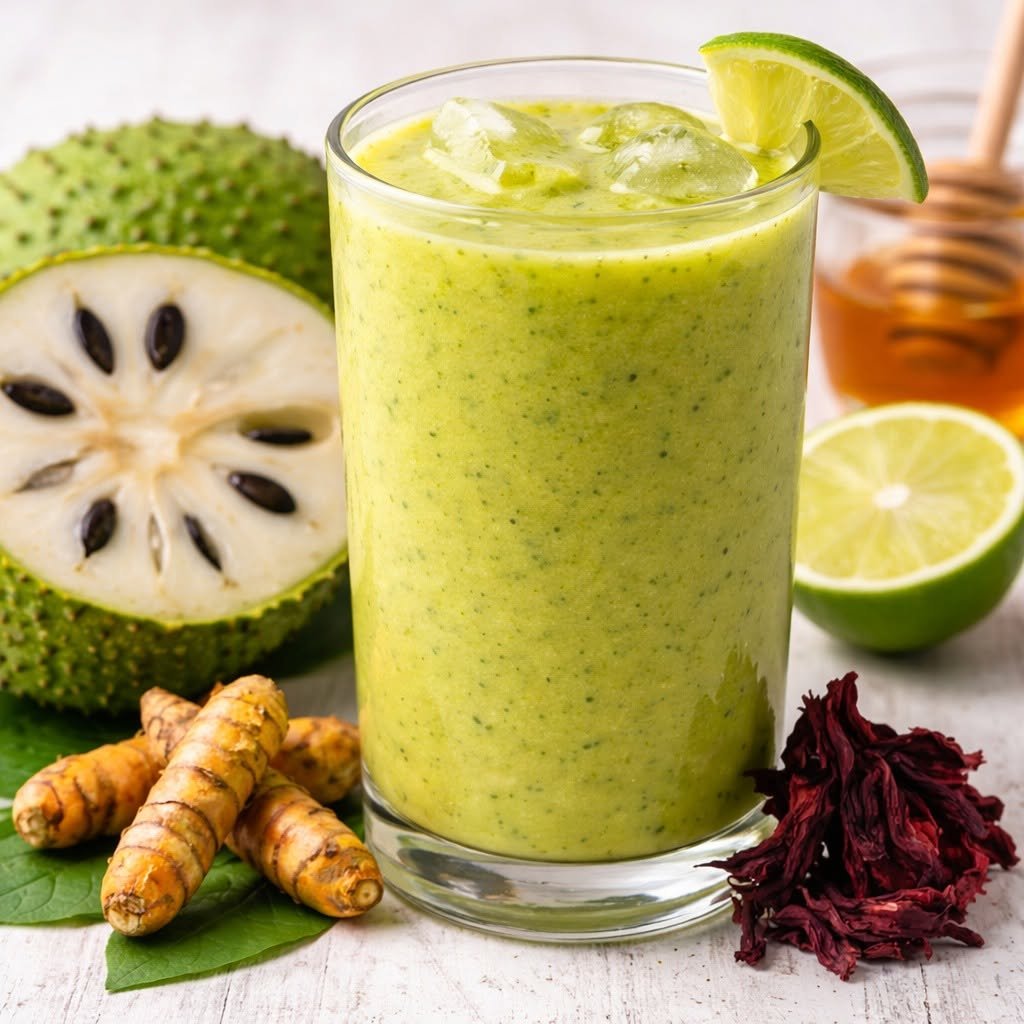

Soursop, also known as graviola or guanabana, is a tropical fruit loved for its creamy white flesh, refreshing sweetness, and pleasantly tangy flavor. Its unusual appearance, soft texture, and delicious taste make it a wonderful ingredient for homemade juices, smoothies, frozen desserts, and ice cream.
The flavor of ripe soursop is often described as a combination of strawberry, pineapple, and banana, with a gentle citrus-like tang. When blended with cold water or milk, the fruit creates a naturally creamy drink that is refreshing, satisfying, and easy to prepare.
Although soursop leaves are traditionally used to prepare herbal tea in some cultures, this recipe focuses on the edible fruit pulp. Soursop leaf tea should be enjoyed, if at all, as a traditional beverage rather than as medicine. Claims that soursop or graviola treats cancer, diabetes, infections, or other diseases are not supported by reliable clinical evidence.
If you have never tried this tropical fruit, homemade soursop juice is an excellent place to start. It requires only a few ingredients and takes approximately 15 minutes to prepare.
What Is Soursop (Graviola)?
Soursop is the fruit of the tropical evergreen tree Annona muricata. It grows in warm regions and is known by several names, including graviola, guanabana, and custard apple in some local markets.
The fruit has a green outer skin covered with soft, pointed bumps. Inside, it contains creamy white flesh with a juicy, slightly fibrous texture and dark seeds.
Its flavor is unusual and delicious. It combines sweet, fruity notes with a refreshing sourness, making it suitable for both sweet and tangy recipes.
Soursop is commonly used in:
- Fresh fruit juice
- Smoothies and milkshakes
- Homemade ice cream
- Fruit salads
- Sorbets and frozen desserts
- Tropical fruit drinks
- Puddings and dessert sauces
The fruit pulp is the part used for this recipe. The seeds, skin, and leaves are not ingredients in the juice.
Why You’ll Love This Homemade Soursop Juice
1. Naturally fruity flavor: Ripe soursop has a delicious combination of sweet and tangy flavors.
2. Creamy texture: Its soft white flesh blends into a smooth, satisfying drink.
3. Simple preparation: You need only a few everyday ingredients and a blender.
4. Easy to customize: Adjust the sweetness, thickness, and citrus flavor to your preference.
5. Perfect for warm weather: Serve it cold with ice for a refreshing tropical beverage.
6. A versatile fruit recipe: The same pulp can be used for smoothies, milkshakes, and frozen desserts.
Recipe Overview
- Preparation time: 15 minutes
- Blending time: 2–3 minutes
- Total time: Approximately 15–20 minutes
- Servings: 3–4 glasses
- Difficulty: Easy
- Course: Beverage
- Cuisine: Tropical-inspired
- Serving temperature: Chilled
Ingredients You’ll Need
These quantities make approximately 3–4 servings.
- 2 cups ripe soursop pulp, seeds and skin removed
- 2 cups cold drinking water
- ½ cup cold milk or coconut milk, optional
- 1–2 tablespoons honey or sugar, optional
- 1 tablespoon fresh lime or lemon juice
- ½ teaspoon vanilla extract, optional
- 1 cup ice cubes
- A few fresh mint leaves, optional, for garnish
Choosing a Good Soursop
The quality of your juice depends mainly on the ripeness of the fruit.
Choose a soursop that is green and slightly soft when gently pressed. A ripe fruit may have a pleasant tropical fragrance and give slightly under gentle pressure.
Avoid fruit that has extensive dark, mushy, or moldy areas. If the fruit smells fermented or unpleasant, it is better not to use it.
If your soursop is firm and unripe, leave it at room temperature until it softens. Once ripe, refrigerate it if you are not preparing it immediately.
Important Note About Soursop Seeds
Soursop contains dark seeds inside its white pulp. Remove every seed before blending.
Do not crush or grind the seeds into the juice. Soursop seeds contain potentially toxic compounds, including annonacin-related substances, and should not be eaten.
How to Make Fresh Soursop Juice
Step 1: Wash the Fruit
Wash the outside of the soursop under clean running water.
Gently rub the skin to remove dirt and surface debris. Dry it with a clean kitchen towel.
Place the fruit on a clean cutting board.
Step 2: Cut the Soursop
Use a sharp knife to cut the fruit into two halves.
You will see the creamy white flesh and dark seeds inside. Depending on the size of the fruit, you may need to divide it into smaller sections to make removing the pulp easier.
Step 3: Remove the Skin and Seeds
Use a spoon or your clean hands to separate the white flesh from the green outer skin.
Carefully remove the dark seeds one by one. Check the pulp several times to make sure no seeds remain.
Discard the skin and seeds. Do not put them into the blender.
Step 4: Measure the Pulp
Place approximately 2 cups of prepared soursop pulp into a measuring cup.
The amount of pulp can be adjusted depending on how thick you want your drink.
For a rich, creamy juice, use more pulp. For a lighter beverage, add a little extra cold water.
Step 5: Add the Ingredients
Transfer the prepared pulp into a blender.
Add:
- 2 cups cold water
- Optional milk or coconut milk
- Honey or sugar, if desired
- Fresh lime or lemon juice
- Vanilla extract, if using
Start with a small amount of sweetener because ripe soursop is naturally sweet.
Step 6: Blend Until Smooth
Blend for approximately 30–60 seconds, or until the mixture looks smooth and creamy.
Avoid blending for an unnecessarily long time.
If the juice is too thick, add a little more cold water and blend briefly again.
Step 7: Strain the Juice
Soursop naturally contains soft fibers. If you prefer a smoother drink, pour the blended mixture through a fine-mesh strainer.
Use a spoon to gently press the pulp through the strainer. Remove any remaining fibrous pieces.
Straining is optional. If you enjoy a thicker, more natural texture, you can serve the juice without straining.
Step 8: Taste and Adjust
Taste the drink before serving.
- Add more lime juice if you prefer a tangier flavor.
- Add a little honey if the fruit is not very sweet.
- Add cold water if the texture is too thick.
- Add coconut milk for a richer tropical flavor.
Blend briefly if you make any adjustments.
Step 9: Serve Chilled
Pour the fresh soursop juice into glasses.
Add ice cubes and garnish with a mint leaf or a small lime slice.
Serve immediately while cold and creamy.
What Does Soursop Taste Like?
Soursop has a distinctive tropical flavor that is difficult to compare with just one fruit.
Many people describe it as a combination of strawberry, pineapple, banana, and citrus. It has a naturally sweet taste balanced by a mild sourness.
Its creamy white pulp also gives it a smooth texture, especially when blended with milk or coconut milk.
The flavor can vary depending on the fruit’s ripeness. Fully ripe soursop is generally sweeter and softer, while less ripe fruit may taste more tart and firm.
If you enjoy tropical fruit drinks, this is a wonderful ingredient to experiment with.
Nutritional Value of Soursop
Soursop contains several nutrients that contribute to a varied diet.
Its pulp provides:
Vitamin C: Soursop contains vitamin C, a nutrient involved in normal immune function, collagen formation, and antioxidant protection.
Dietary fiber: The fruit contains fiber, which supports normal digestive function when included in an overall balanced diet.
Carbohydrates: Like other fruits, soursop contains natural carbohydrates that provide energy.
Potassium: Soursop provides potassium, an essential mineral involved in normal muscle and nerve function.
Water: Fresh fruit contains water, contributing to the overall fluid content of the recipe.
The exact nutrition of your juice depends on the size of the fruit, the amount of pulp used, and whether you add milk, honey, or sugar.
For a lighter version, use water instead of milk and leave out added sweeteners.
Potential Benefits of Including Soursop in Your Diet
Soursop is a nutritious tropical fruit that can be enjoyed as part of a balanced eating pattern. Its nutrients are useful, but eating the fruit should not be confused with using it as a medical treatment.
1. Provides Vitamin C
Vitamin C is an important nutrient that helps the body perform several normal functions.
It contributes to normal immune-system activity and supports collagen production. Collagen is a protein needed for healthy connective tissue, skin, and other structures.
Enjoying soursop alongside other fruits and vegetables can help increase dietary variety.
2. Contains Dietary Fiber
The fruit pulp contains dietary fiber.
Fiber is an important part of a balanced diet because it helps support regular bowel movements and normal digestive function.
Keeping some of the pulp in your juice rather than straining it completely may preserve more of its natural fiber.
3. Adds Variety to Your Fruit Intake
Eating different types of fruit provides a wider range of nutrients and flavors.
Soursop offers a tropical option for people who enjoy trying unfamiliar ingredients. It can be combined with mango, pineapple, banana, lime, or coconut.
4. Contributes to Fluid Intake
Because fresh soursop contains water and this recipe includes additional drinking water, the finished beverage contributes to daily fluid intake.
However, it should not replace plain water or be considered a special hydration treatment.
5. Contains Naturally Occurring Plant Compounds
Soursop contains various naturally occurring plant compounds, including acetogenins and other phytochemicals.
Some compounds have been investigated in laboratory research. Laboratory findings do not establish that eating soursop or drinking its juice prevents or treats human diseases.
The fruit is best enjoyed as food, without relying on exaggerated health claims.
Five Delicious Soursop Drink Variations
Once you have prepared the basic recipe, you can create several different tropical drinks.
1. Creamy Soursop Milkshake
For a richer version, replace the water with 1½ cups cold milk.
Add the soursop pulp, a few ice cubes, and a small amount of honey. Blend until creamy.
For an extra-thick milkshake, add one small scoop of vanilla ice cream.
2. Soursop and Coconut Drink
Combine 2 cups soursop pulp with 1½ cups chilled coconut milk.
Add a little lime juice and blend until smooth.
This variation has a rich tropical flavor that works beautifully as an afternoon treat.
3. Soursop Pineapple Juice
Add ½ cup fresh pineapple chunks to the basic recipe.
Blend the pineapple with soursop pulp and cold water. The pineapple increases the fruity sweetness and adds a pleasant tang.
4. Soursop Banana Smoothie
Add one ripe banana and ½ cup plain yogurt to the blender.
Combine with the soursop pulp and a little cold water. Blend until thick and smooth.
This is a filling smoothie suitable for breakfast or an afternoon snack.
5. Sugar-Free Soursop Juice
Use ripe soursop pulp, cold water, and fresh lime juice.
Skip honey, sugar, and sweetened milk.
A fully ripe fruit should provide enough natural sweetness for many people to enjoy the drink without added sugar.
How to Use Soursop Pulp in Other Recipes
Fresh soursop pulp is not limited to juice. It can be used in several homemade desserts.
Soursop ice cream: Blend seedless pulp with cream, milk, and sugar. Freeze according to your preferred ice cream method.
Soursop smoothie bowls: Blend the pulp with frozen banana and yogurt. Serve in a bowl with fresh fruit.
Soursop popsicles: Mix the pulp with coconut milk and a little sweetener. Pour into popsicle molds and freeze until solid.
Soursop fruit salad: Combine small pieces of ripe soursop pulp with mango, pineapple, and banana. Carefully check for seeds before serving.
Soursop yogurt dessert: Fold a little prepared pulp into plain yogurt and serve chilled.
How to Store Fresh Soursop Juice
Fresh soursop juice tastes best immediately after preparation.
If you have leftovers, follow these storage steps:
- Transfer the juice into a clean, airtight glass container.
- Refrigerate promptly.
- Keep it cold at approximately 4°C (40°F) or below.
- Use it within 24 hours for the best quality.
- Shake or stir before serving because natural pulp may settle.
Do not leave freshly prepared juice at room temperature for extended periods. Discard it if it develops an unusual smell, taste, or appearance.
If you want to prepare soursop in advance, you can remove the skin and seeds, portion the pulp, and freeze it in an airtight freezer-safe container.
Important Safety Notes
Soursop is a fruit, but some parts of the plant and concentrated preparations deserve special caution.
- Remove all seeds: Never blend or intentionally eat the seeds.
- Use the edible pulp: This recipe is made with ripe white fruit flesh, not leaves, bark, roots, or seeds.
- Do not treat it as medicine: Soursop juice has not been proven to cure cancer, diabetes, high blood pressure, or infections.
- Be cautious with supplements: Concentrated graviola extracts and supplements are different from ordinary fruit. Their safety and effectiveness are not well established.
- Neurological concerns: Some research has raised concerns about compounds in soursop, particularly annonacin, and possible neurological effects with substantial or prolonged exposure. Avoid concentrated preparations and do not consume large medicinal quantities.
- Medical conditions: If you have a chronic medical condition or take regular medication, discuss frequent consumption or use of concentrated soursop products with a healthcare professional.
- Food allergies: Stop eating the fruit if you experience signs of an allergic reaction.
Frequently Asked Questions
1. Is soursop the same as graviola?
Yes. Soursop, graviola, and guanabana are common names for the same tropical fruit, which comes from the Annona muricata tree.
2. Can I eat fresh soursop fruit?
Yes. The ripe white pulp is edible after the skin and seeds have been removed. It can be eaten with a spoon or used in juice and desserts.
3. Can I blend soursop seeds?
No. Remove all dark seeds before blending. Do not crush or grind them into the drink.
4. Can I drink soursop juice every day?
There is no established medical requirement to drink soursop juice daily. A moderate serving can be enjoyed as part of a varied diet, but avoid excessive consumption and concentrated extracts.
5. Is soursop juice good for diabetes?
Soursop juice is not a diabetes treatment. The fruit contains natural carbohydrates, and added honey or sugar increases the drink’s carbohydrate content. People managing blood glucose should consider portion size and follow their healthcare professional’s dietary advice.
6. Can I make soursop juice without milk?
Absolutely. Water alone produces a delicious, refreshing drink. You can also use coconut water if you enjoy its flavor.
7. Can I use frozen soursop pulp?
Yes. Use properly prepared pulp with the skin and seeds removed. Thaw it safely in the refrigerator or blend it while partially frozen, adding cold water as needed.
8. Can I use soursop leaves to make tea?
Soursop leaves have traditionally been used to prepare herbal infusions in some communities. However, traditional use does not establish safety or medicinal effectiveness. Concentrated or regular medicinal use may carry risks, so this recipe does not include the leaves.
9. Can soursop cure cancer?
No reliable clinical evidence shows that eating soursop or drinking its juice cures cancer. Laboratory research on plant compounds is not proof of a treatment in people. Anyone receiving cancer care should discuss dietary supplements and herbal preparations with their oncology team.
10. Why is my soursop juice too thick?
Soursop pulp is naturally creamy and may contain fibers. Add cold water gradually until you reach your preferred consistency. You can also strain the drink for a smoother texture.
Final Thoughts
Fresh soursop juice is a delicious way to enjoy one of the tropics’ most distinctive fruits. Its creamy white pulp, naturally sweet-and-sour flavor, and smooth texture make it perfect for homemade beverages and desserts.
With just ripe soursop, cold water, and a little lime juice, you can prepare a refreshing drink in minutes. Add coconut milk for a richer version, pineapple for extra tropical flavor, or banana and yogurt for a filling smoothie.
Remember to remove every seed before blending and use only the edible fruit pulp. Soursop leaves and concentrated extracts should not be treated as medicines, and the fruit should not be promoted as a cure for disease.
Prepare a fresh glass, serve it chilled, and enjoy the naturally tropical flavor of homemade soursop juice