Olivia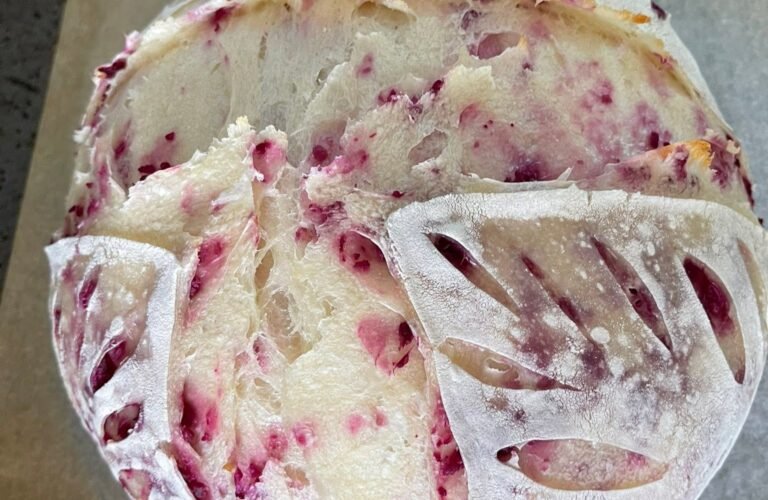
Beautifully colored, naturally sweet, and incredibly soft, Sourdough Bread with Purple Sweet Potato is a stunning artisan loaf that combines the earthy sweetness of purple sweet potatoes with the tangy complexity of naturally fermented sourdough. The vibrant purple hue creates an eye-catching bread that’s as delicious as it is beautiful. With a crisp crust, moist crumb, and subtle sweetness, this loaf is perfect for breakfast, sandwiches, or simply toasted with butter.
Whether you’re looking for a unique baking project or a nutritious twist on traditional sourdough, this recipe delivers a loaf that’s both flavorful and visually impressive.
Prep Time: 45 minutes
Bulk Fermentation: 5–7 hours
Cold Proof: 8–12 hours
Bake Time: 45 minutes
Total Time: About 15–18 hours
Yield: 1 large loaf
Why You’ll Love This Recipe
- Gorgeous natural purple color
- Soft and moist crumb
- Naturally sweet flavor
- Rich in antioxidants
- No artificial coloring
- Perfect for sandwiches and toast
- Long fermentation enhances flavor
- Excellent for meal prep
- Freezer-friendly
- Unique and impressive
What Is Purple Sweet Potato?
Purple sweet potatoes are naturally vibrant root vegetables with:
- Mild sweetness
- Creamy texture
- High antioxidant content
- Beautiful purple flesh
Popular varieties include:
- Okinawan sweet potatoes
- Stokes Purple® sweet potatoes
- Japanese purple sweet potatoes
Their rich color remains beautiful after baking.
Ingredients
For the Dough
- 500g bread flour
- 100g active sourdough starter
- 220g water
- 180g cooked and mashed purple sweet potato
- 10g salt
- 1 tablespoon honey (optional)
Equipment Needed
- Large mixing bowl
- Kitchen scale
- Dough scraper
- Banneton basket
- Dutch oven
- Bread lame
- Cooling rack
Preparing the Purple Sweet Potato
Ingredients
- 1 medium purple sweet potato
Instructions
Wash thoroughly.
Peel and cut into chunks.
Steam or boil until fork tender.
Allow to cool completely.
Mash until smooth.
Measure out:
180g mashed sweet potato.
Why Use Purple Sweet Potato?
It contributes:
- Moisture
- Mild sweetness
- Natural color
- Soft texture
- Additional nutrients
The mashed potato creates an exceptionally tender crumb.
Preparing Your Starter
Feed your sourdough starter 4–6 hours before mixing.
Your starter should:
- Be bubbly
- Double in size
- Float in water
- Smell pleasantly tangy
Active starter is essential for proper fermentation.
Step 1: Mix the Dough
In a large bowl combine:
- Water
- Active starter
Stir until dissolved.
Add:
- Mashed purple sweet potato
- Honey
Mix thoroughly.
Add:
- Bread flour
Mix until no dry flour remains.
Cover and rest for:
30 minutes.
This stage is called autolyse.
Why Autolyse Matters
Autolyse helps:
- Hydrate flour
- Improve gluten development
- Create a stronger dough
- Produce better texture
This rest makes handling easier later.
Step 2: Add Salt
Sprinkle salt over the dough.
Mix thoroughly by hand.
The dough will feel sticky but manageable.
Step 3: Begin Bulk Fermentation
Cover the bowl.
Allow dough to rest for 30 minutes.
Step 4: First Stretch and Fold
Grab one side of the dough.
Stretch upward.
Fold toward the center.
Repeat on all four sides.
Cover and rest another 30 minutes.
Step 5: Continue Stretch and Folds
Repeat stretch and folds every 30 minutes.
Perform four sets total.
The dough should gradually become:
- Smoother
- Stronger
- More elastic
Why Stretch and Fold?
Stretch-and-fold techniques:
- Build gluten gently
- Improve structure
- Encourage even fermentation
- Create open crumb
No intensive kneading required.
Step 6: Bulk Fermentation
After the final fold, cover the dough.
Allow it to ferment for:
3–5 more hours
or until increased by approximately 50%.
Signs Bulk Fermentation Is Complete
The dough should:
- Look puffy
- Jiggle slightly
- Have bubbles on the surface
- Feel airy
Temperature greatly affects fermentation time.
Step 7: Pre-Shape
Turn dough onto a lightly floured surface.
Shape gently into a loose ball.
Allow it to rest for:
20 minutes.
Why Bench Rest Matters
Bench resting:
- Relaxes gluten
- Makes final shaping easier
- Improves structure
Avoid skipping this step.
Step 8: Final Shape
Shape into:
Round Boule
or
Oval Batard
Create surface tension without tearing the dough.
Step 9: Transfer to Banneton
Dust the banneton with flour.
Place dough seam-side up.
Cover.
Step 10: Cold Proof
Refrigerate overnight for:
8–12 hours.
Cold fermentation enhances:
- Flavor
- Texture
- Crust development
Step 11: Preheat the Oven
Place a Dutch oven inside.
Preheat to:
475°F (245°C)
for at least 45 minutes.
Proper preheating creates excellent oven spring.
Step 12: Score the Dough
Turn dough onto parchment paper.
Score with a sharp blade.
A single slash works beautifully.
Decorative scoring patterns are optional.
Why Scoring Is Important
Scoring controls expansion.
Without it, bread may crack unpredictably.
Step 13: Bake Covered
Transfer dough into the hot Dutch oven.
Cover immediately.
Bake for:
25 minutes.
Steam trapped inside creates:
- Crispy crust
- Maximum rise
- Beautiful bloom
Step 14: Bake Uncovered
Remove the lid.
Reduce oven temperature to:
450°F (230°C)
Bake another:
20 minutes.
The loaf should become deeply golden.
Internal Temperature
Finished bread should register:
205–210°F
for complete baking.
Step 15: Cool Completely
Transfer loaf to a cooling rack.
Allow to cool for:
2 hours
before slicing.
Why Cooling Matters
Fresh bread continues cooking inside.
Cutting too soon may cause:
- Gummy crumb
- Dense texture
Patience rewards you with the best results.
Flavor Profile
This bread offers:
Purple Sweet Potato
- Mild sweetness
- Earthy notes
- Creamy texture
Sourdough
- Slight tang
- Deep flavor
Crust
- Crisp
- Golden
Crumb
- Soft
- Moist
- Tender
The flavors are balanced and comforting.
Serving Suggestions
Enjoy with:
- Butter
- Cream cheese
- Honey
- Fruit preserves
- Peanut butter
Perfect for breakfast or snacks.
Toast Ideas
Try topping with:
Avocado
For savory flavor.
Cinnamon Butter
For sweetness.
Ricotta and Honey
For an elegant breakfast.
Nutella
For dessert.
Sandwich Ideas
This bread works beautifully for:
- Turkey sandwiches
- Chicken salad sandwiches
- Ham and cheese
- Grilled cheese
- Tuna salad
The slight sweetness complements savory fillings.
Nutritional Benefits
Purple sweet potatoes contain:
- Fiber
- Potassium
- Vitamin C
- Antioxidants
- Complex carbohydrates
Natural fermentation may also improve digestibility.
Storage Instructions
Store in:
- Bread box
- Paper bag
- Cloth bread bag
Best consumed within:
3–4 days.
Freezing Instructions
Slice before freezing.
Store in freezer-safe bags.
Freeze for:
Up to 3 months.
Toast directly from frozen.
Variations
Purple Sweet Potato Walnut Bread
Add:
- ½ cup chopped walnuts
for crunch.
Purple Sweet Potato Raisin Bread
Fold in:
- ½ cup raisins
for sweetness.
Purple Sweet Potato Cinnamon Bread
Add:
- 1 teaspoon cinnamon
for warm flavor.
Purple Sweet Potato Honey Bread
Increase honey to:
2 tablespoons
for extra sweetness.
Purple Sweet Potato Coconut Bread
Add:
- ¼ cup shredded coconut
for tropical notes.
Troubleshooting
Dense Bread
Possible causes:
- Weak starter
- Underproofing
Sticky Dough
Purple sweet potatoes contain varying moisture.
Add a little flour if needed.
Flat Loaf
May indicate:
- Overproofing
- Weak gluten structure
Pale Crust
Bake slightly longer uncovered.
Frequently Asked Questions
Can I Use Purple Yam?
Yes. Ube or purple yam works beautifully.
Can I Use White Sweet Potatoes?
Absolutely.
Color will change, but flavor remains wonderful.
Can I Use Whole Wheat Flour?
Yes.
Replace up to 20% of the bread flour.
Can I Freeze the Dough?
Yes.
Freeze after shaping and thaw before baking.
Can I Make Rolls Instead?
Certainly.
Divide into 8–10 rolls and reduce baking time.
Make It Extra Special
For an even richer loaf, add:
- White chocolate chips
- Pecans
- Cinnamon
- Dried cranberries
- Pumpkin seeds
These additions pair wonderfully with the sweet potato flavor.
Final Thoughts
This Sourdough Bread with Purple Sweet Potato combines artisan sourdough tradition with the natural sweetness and striking color of purple sweet potatoes. The result is a loaf that’s soft, moist, slightly sweet, and incredibly beautiful. With its crisp crust and tender crumb, it’s perfect for breakfast, sandwiches, or simply enjoying warm with butter.
Whether you’re baking for family, sharing with friends, or looking for a show-stopping loaf, this naturally colored sourdough bread is sure to become one of your favorites. Once you cut into its vibrant purple interior and taste its gentle sweetness, you’ll understand why this bread is as memorable as it is delicious. Happy baking!