Olivia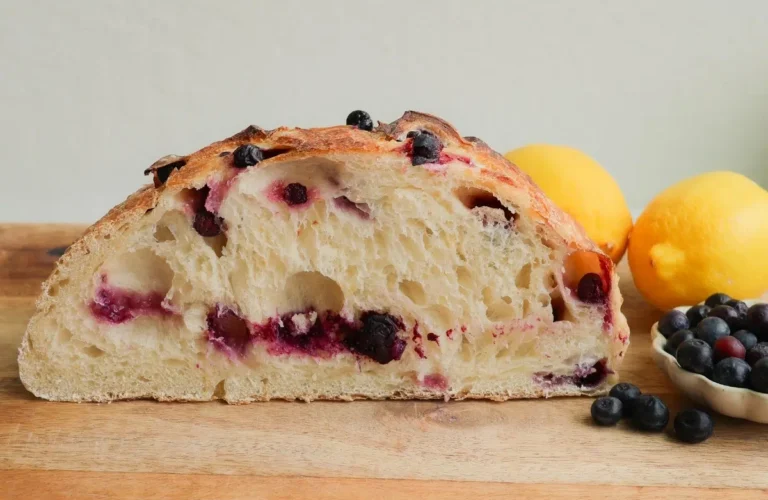
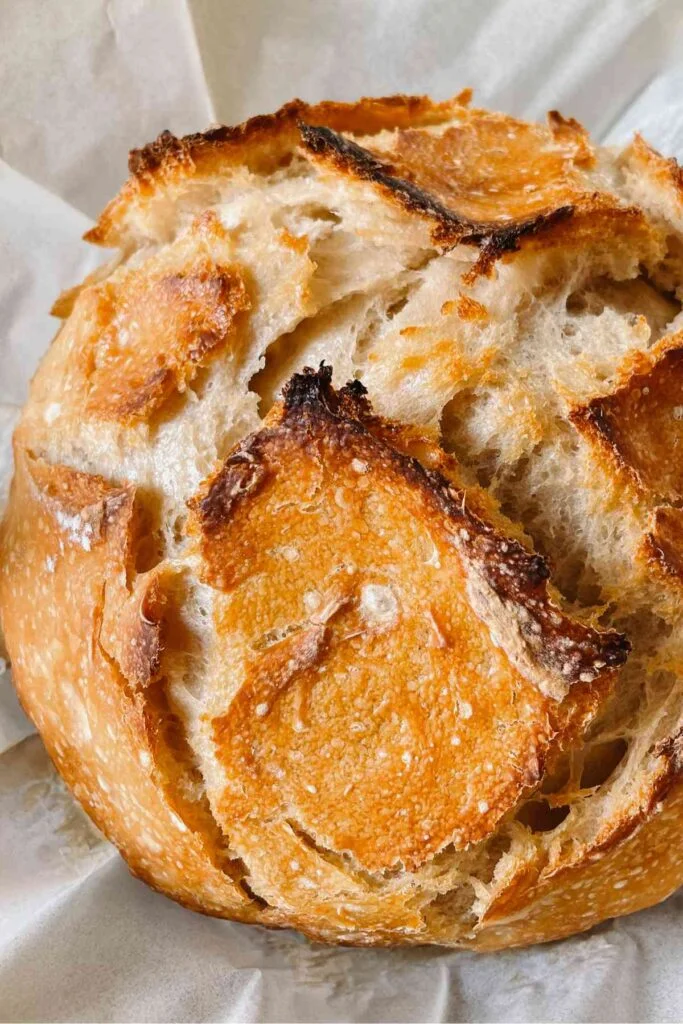
Nothing says spring and summer baking quite like the bright, refreshing combination of lemon and blueberries. This Lemon Blueberry Sourdough Bread combines the tangy depth of naturally fermented sourdough with sweet bursts of juicy blueberries and fresh citrus flavor. The result is a beautiful artisan loaf with a crisp golden crust, a soft chewy crumb, and pockets of sweet berries throughout every slice.
Whether enjoyed toasted for breakfast, served with tea in the afternoon, or transformed into French toast, this loaf offers a delightful balance of sweet, tart, and tangy flavors. The natural fermentation enhances both the texture and taste, making this bread a standout addition to your sourdough baking repertoire.
Prep Time: 45 minutes
Bulk Fermentation: 5–6 hours
Cold Proof: 8–12 hours
Bake Time: 45 minutes
Total Time: Approximately 15 hours
Yield: 1 large artisan loaf
Why You’ll Love This Recipe
- Naturally fermented
- Fresh lemon flavor
- Juicy blueberries throughout
- Beautiful artisan appearance
- Perfect balance of sweet and tangy
- Crispy crust
- Soft, chewy crumb
- Great for breakfast or dessert
- Excellent toasted
- Freezer-friendly
Ingredients
For the Dough
- 500g bread flour
- 350g water
- 100g active sourdough starter
- 10g salt
For the Lemon Blueberry Addition
- 150g fresh blueberries
- Zest of 2 lemons
- 1 tablespoon fresh lemon juice
- 2 tablespoons sugar (optional)
Equipment Needed
- Large mixing bowl
- Kitchen scale
- Dough scraper
- Banneton basket
- Dutch oven
- Bread lame or sharp razor
- Cooling rack
Understanding the Ingredients
Bread Flour
Bread flour contains more protein than all-purpose flour, helping create:
- Better gluten development
- Stronger structure
- Chewier texture
Active Sourdough Starter
Your starter should be:
- Bubbly
- Active
- Doubled in size after feeding
A healthy starter is the key to a well-risen loaf.
Blueberries
Fresh blueberries work best because they hold their shape during folding.
Frozen blueberries may be used but should remain frozen until added.
Lemons
Fresh lemons provide:
- Bright citrus flavor
- Aromatic oils from the zest
- Natural acidity
Avoid bottled lemon juice for the best flavor.
Step 1: Feed Your Starter
Feed your starter approximately 4–6 hours before mixing.
It should be at peak activity when used.
A strong starter ensures proper fermentation and rise.
Step 2: Mix the Dough
In a large bowl combine:
- Water
- Active starter
Mix until the starter dissolves.
Add:
- Bread flour
Mix until no dry flour remains.
The dough will look rough and shaggy.
Cover and rest for:
30 minutes
This stage is known as autolyse.
Why Autolyse Matters
Autolyse allows the flour to absorb water completely.
Benefits include:
- Improved gluten formation
- Easier dough handling
- Better crumb structure
Step 3: Add Salt
Sprinkle salt over the dough.
Mix thoroughly until incorporated.
The dough will begin to strengthen.
Step 4: Begin Bulk Fermentation
Cover the dough.
Allow it to rest for 30 minutes.
Step 5: First Stretch and Fold
Perform a stretch and fold.
Grab one side of the dough.
Stretch upward.
Fold toward the center.
Repeat on all four sides.
Step 6: Add Lemon Zest
During the second fold, gently add:
- Lemon zest
- Lemon juice
Fold carefully to distribute evenly.
The dough will become fragrant with citrus aroma.
Why Lemon Zest Is Important
Most lemon flavor comes from the zest rather than the juice.
The zest contains aromatic oils that provide intense citrus character.
Step 7: Continue Stretch and Folds
Perform three additional stretch-and-fold sessions every 30 minutes.
The dough should become:
- Smooth
- Elastic
- Strong
Step 8: Incorporate Blueberries
After the third fold:
Gently scatter blueberries over the dough.
Fold carefully.
Try not to crush them.
The goal is even distribution without excessive juice release.
Tips for Adding Blueberries
Use gentle movements.
Crushed berries can:
- Release excess moisture
- Stain the dough
- Create sticky spots
A few broken berries are perfectly fine.
Step 9: Complete Bulk Fermentation
Cover the dough.
Allow it to continue fermenting until increased by approximately:
50–75%
This typically takes:
4–6 hours
depending on room temperature.
Signs Bulk Fermentation Is Complete
The dough should:
- Look puffy
- Have visible bubbles
- Jiggle slightly
- Feel airy
These are signs of proper fermentation.
Step 10: Pre-Shape
Lightly flour your work surface.
Turn out the dough carefully.
Shape into a loose round.
Allow to rest for:
20 minutes
Why Bench Rest Matters
This resting period allows the gluten to relax.
Relaxed dough is easier to shape and creates better structure.
Step 11: Final Shape
Shape into:
- A boule (round loaf)
or
- A batard (oval loaf)
Create surface tension without tearing the dough.
Step 12: Transfer to Banneton
Dust a banneton with flour.
Place dough seam-side up.
Cover.
Step 13: Cold Proof
Refrigerate overnight for:
8–12 hours
Cold proofing develops:
- Flavor
- Structure
- Better scoring ability
Why Overnight Fermentation Improves Bread
Long fermentation produces:
- More complex flavor
- Improved texture
- Better crust development
The wait is worth it.
Step 14: Preheat the Oven
Place a Dutch oven inside the oven.
Preheat to:
475°F (245°C)
for at least 45 minutes.
A fully heated Dutch oven is crucial for oven spring.
Step 15: Score the Dough
Turn dough onto parchment paper.
Using a bread lame or sharp razor:
Make one deep slash.
Or create decorative scoring patterns.
Why Scoring Is Necessary
Scoring allows controlled expansion during baking.
Without scoring, the loaf may split unpredictably.
Step 16: Bake Covered
Transfer dough into the hot Dutch oven.
Cover immediately.
Bake for:
25 minutes
The trapped steam helps create:
- Crisp crust
- Maximum rise
- Beautiful texture
Step 17: Bake Uncovered
Remove the lid.
Reduce temperature to:
450°F (230°C)
Bake another:
20 minutes
until deeply golden brown.
What Makes a Great Crust?
A perfect sourdough crust should be:
- Crisp
- Deeply colored
- Slightly blistered
This indicates proper baking.
Step 18: Cool Completely
Transfer loaf to a cooling rack.
Allow to cool for:
At least 2 hours
before slicing.
Why Cooling Is Essential
Fresh bread continues cooking internally.
Cutting too soon can result in:
- Gummy texture
- Compressed crumb
Patience leads to the best results.
Flavor Profile
This bread offers:
Sourdough
- Tangy
- Complex
- Slightly nutty
Lemon
- Bright
- Fresh
- Aromatic
Blueberries
- Sweet
- Juicy
- Fruity
Together they create a wonderfully balanced loaf.
Serving Suggestions
Enjoy slices with:
- Butter
- Cream cheese
- Honey
- Lemon curd
- Mascarpone
Each complements the citrus and berry flavors.
Breakfast Ideas
Toast slices and serve with:
- Greek yogurt
- Fresh blueberries
- Coffee
A bakery-worthy breakfast at home.
Brunch Presentation
Arrange slices on a wooden board with:
- Lemon wedges
- Fresh berries
- Soft cheese
Perfect for entertaining.
Lemon Blueberry French Toast
Transform leftover bread into French toast.
The fruit and citrus flavors become even more pronounced when cooked.
Storage Instructions
Store in a bread bag or airtight container.
Best enjoyed within:
3–4 days
Freezing Instructions
Slice before freezing.
Store for:
Up to 3 months
Toast directly from frozen.
Variations
Lemon Blueberry Honey Bread
Add:
- 2 tablespoons honey
to the dough.
Lemon Blueberry White Chocolate Bread
Fold in:
- ½ cup white chocolate chips
for extra sweetness.
Mixed Berry Lemon Bread
Replace some blueberries with:
- Raspberries
- Blackberries
for additional flavor.
Lemon Poppy Seed Sourdough
Add:
- 1 tablespoon poppy seeds
for a classic lemon-poppy combination.
Common Mistakes to Avoid
Weak Starter
May result in poor rise.
Overproofing
Can cause a flat loaf.
Crushing the Blueberries
Creates excess moisture.
Underbaking
Produces a gummy center.
Cutting Too Soon
Can ruin the crumb structure.
Frequently Asked Questions
Can I Use Frozen Blueberries?
Yes.
Keep them frozen until folding into the dough.
Can I Add More Lemon?
Absolutely.
Extra zest enhances citrus flavor without affecting hydration significantly.
Is Sugar Necessary?
No.
Sugar is optional and only adds a touch of sweetness.
Can I Use All-Purpose Flour?
Yes, but bread flour provides superior structure.
Can I Make Two Loaves?
Simply double all ingredients.
Final Thoughts
This Lemon Blueberry Sourdough Bread is a beautiful artisan loaf that combines the tangy complexity of sourdough with the fresh brightness of lemon and the sweet juiciness of blueberries. With its crisp crust, chewy crumb, and bursts of fruity flavor, it’s perfect for breakfast, brunch, snacks, or dessert.
Whether enjoyed warm with butter, toasted with cream cheese, or transformed into decadent French toast, this loaf is sure to become a favorite in your sourdough baking collection. One slice is all it takes to appreciate the wonderful harmony of citrus, berries, and naturally fermented bread. Happy baking!